AS350 Ecureuil / H125, a world of missions
Photographic series, comparative profiles, historical reconstructions and artistic illustrations.
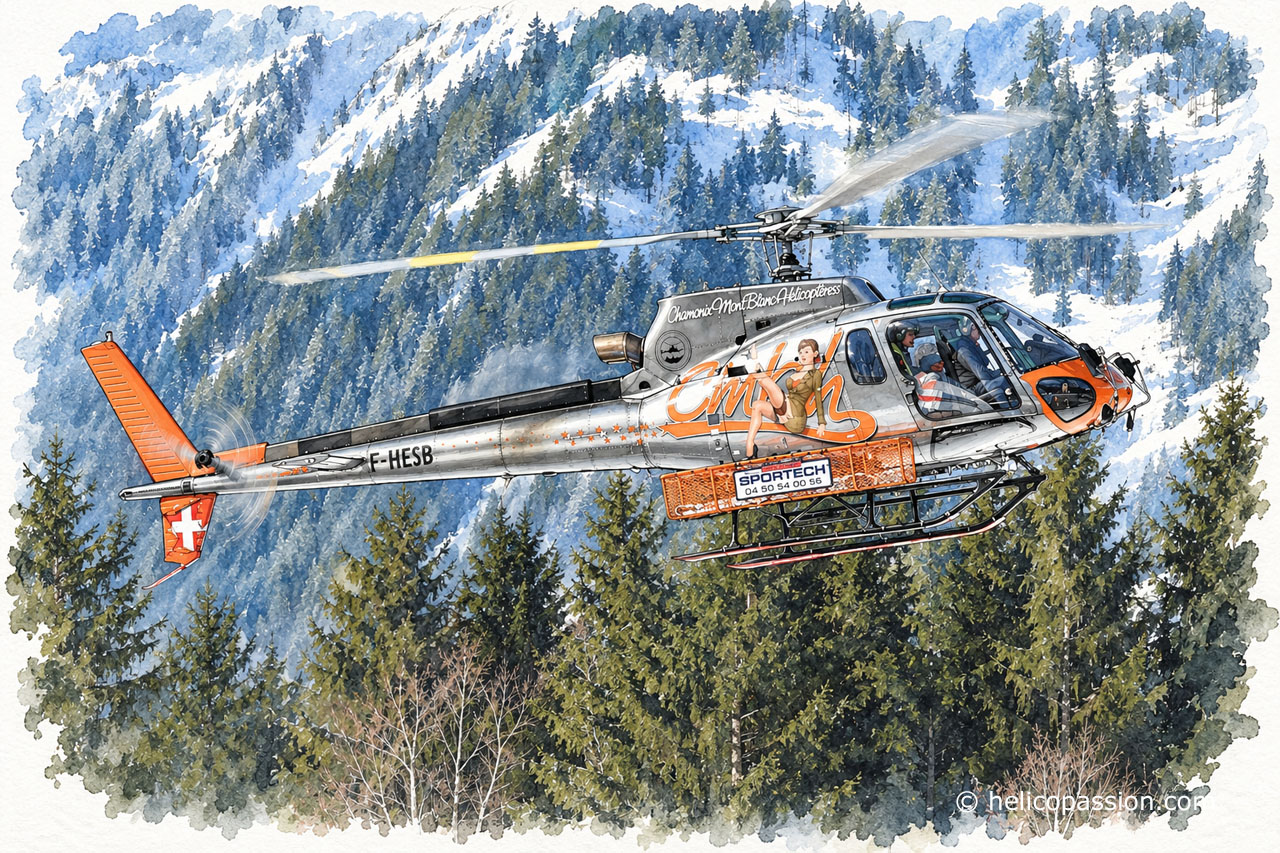 (Helicopassion illustration with AI, based on a photograph by André Bour) CMBH AS350 B3 Ecureuil F-HESB — Chamonix Mont Blanc Hélicoptères
Designed by Aerospatiale in the 1970s to succeed the Alouette II, the AS350 Ecureuil has become one of the world's most versatile light helicopters. More than fifty years after its first flight on 27 June 1974, it continues its career as the Airbus H125.
Known as the AStar in North America and the Esquilo in Brazil, the helicopter has been adapted to an extraordinary variety of missions, from aerial work in the Alps and high-altitude rescue in the Himalayas to law enforcement, passenger transport and military operations.
This Helicopassion visual guide explores the Ecureuil family through original aviation photography, comparative profiles, historical reconstructions and artistic illustrations.
From the AS350 Ecureuil to the H125
One of the key innovations of the original design was the three-bladed Starflex main rotor. Its composite hub and elastomeric components replace conventional mechanical hinges, reducing weight, parts count and maintenance requirements.
The AS350 evolved through successive versions, including the B2 and the high-performance B3, introduced in 1997. The B3e followed in 2011, later marketed as the H125. Its ability to carry external loads of up to 1,400 kg, depending on operating conditions, makes it particularly valuable for aerial work.
The twin-engine AS355 Ecureuil 2 first flew in 1979. The military Fennec variants include the single-engine AS550 and the twin-engine AS555.
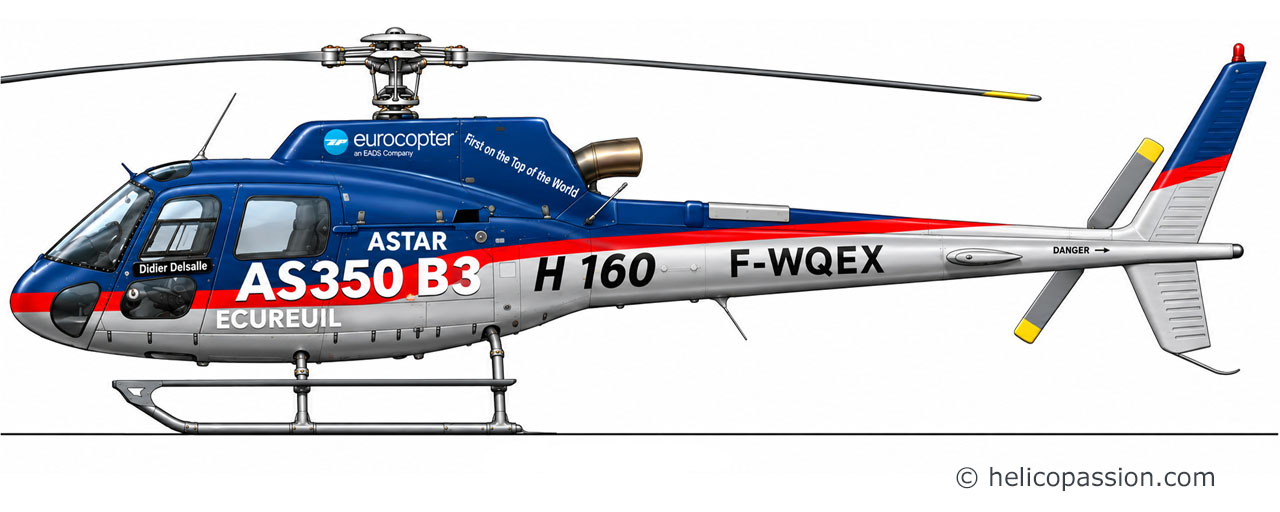
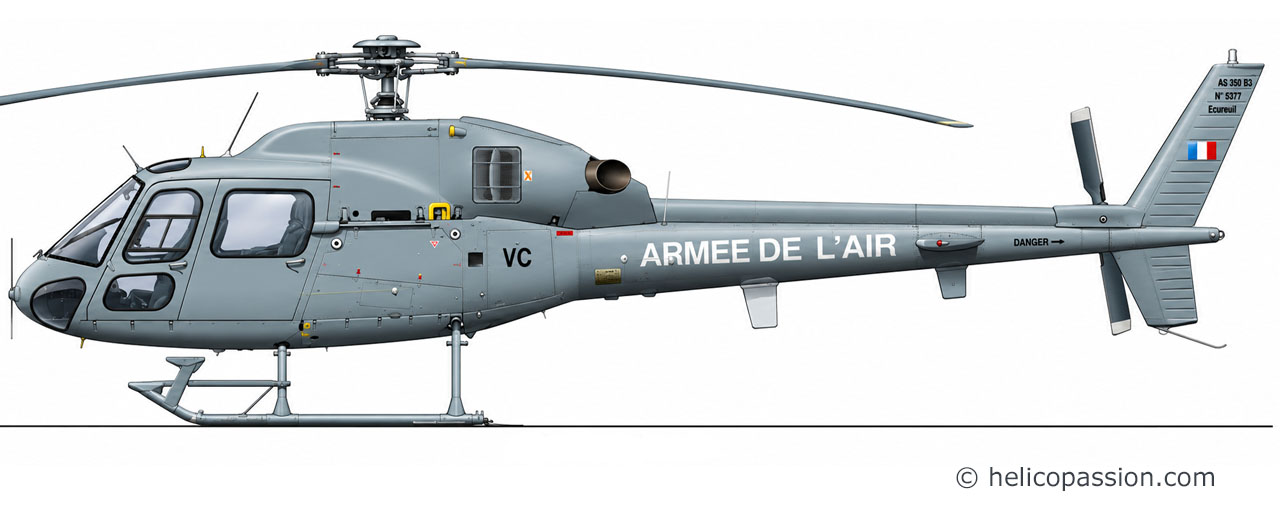
In July 2022, Airbus Helicopters delivered the 7,000th helicopter of the Ecureuil family to French operator Blugeon Hélicoptères. This figure includes the EC130/H130, developed from the AS350 for passenger transport. By the end of 2024, 7,441 helicopters of the family had been produced.
Beyond the limits: the Himalayas
Everest, 14 May 2005
At the controls of an AS350 B3, Didier Delsalle landed on the summit of Mount Everest at 8,848 metres. The achievement demonstrated the high-altitude capabilities of the Ecureuil under exceptional conditions.
 (Photo Eurocopter) 14 May 2005 — Didier Delsalle lands AS350 B3 F-WQEX on the summit of Everest.
 (Photo André Bour - Helicopassion) Didier Delsalle and the record-setting AS350 B3 at the Paris Air Show, 13 June 2005.
High-altitude rescue by longline
Unlike a rescue hoist, a longline is a fixed rope suspended beneath the helicopter. It can be used to reach people in terrain where landing is impossible, without the additional weight of a hoist.
On 29 April 2010, Swiss pilot Daniel Aufdenblatten and mountain rescue specialist Richard Lehner participated in the rescue of three climbers on Annapurna at around 6,950 metres, flying a Fishtail Air AS350 B3 as part of a collaboration with Air Zermatt.
In May 2013, Italian pilot Maurizio Folini rescued climber Sudarshan Gautam from the slopes of Lhotse at an estimated altitude of 7,800 metres. The seats and doors had been removed to reduce weight. Folini carried out the final extraction alone, using a 20-metre longline.
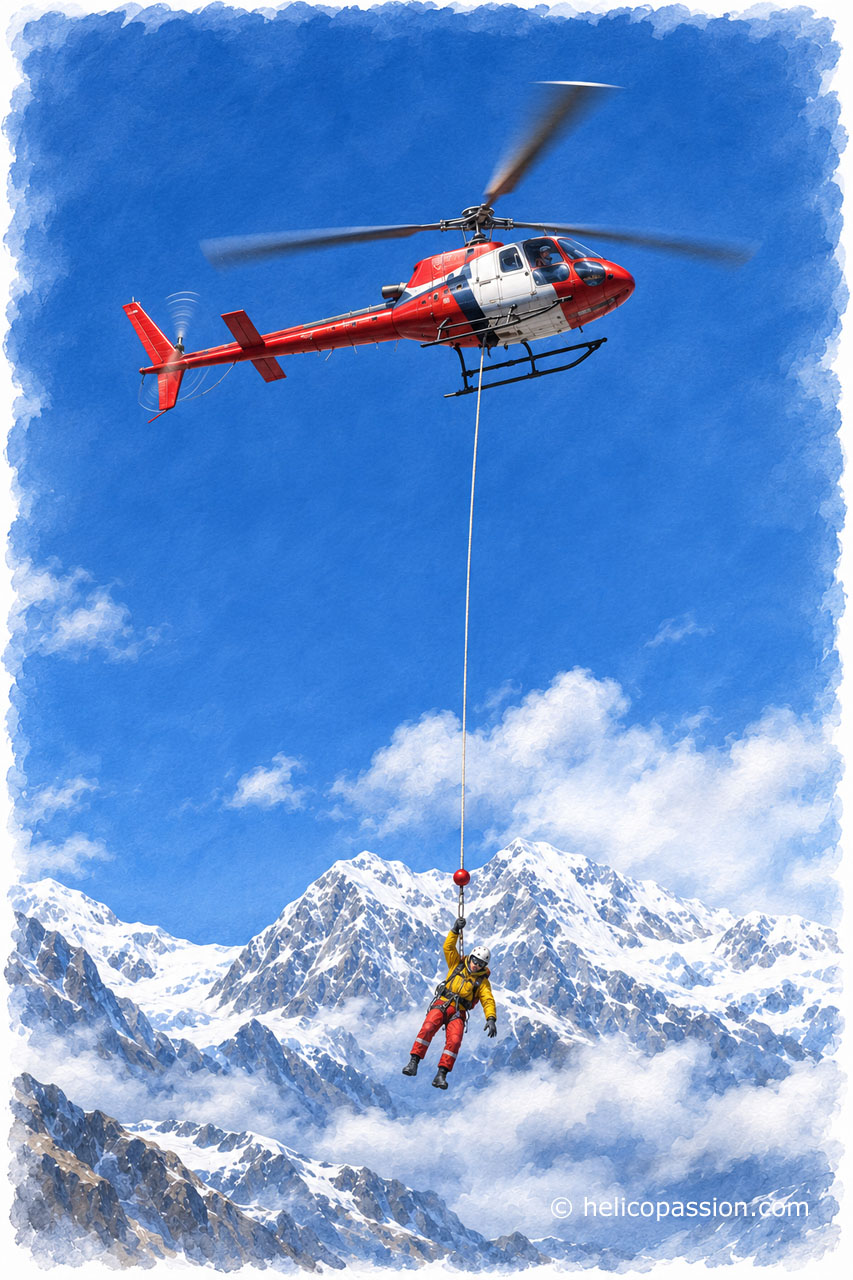 (Helicopassion historical reconstruction with AI, based on archival photographs) Lhotse, May 2013 — visual reconstruction of the longline rescue of Sudarshan Gautam.
Aerial work in the Alps
The Alps are one of the Ecureuil's major operating environments in Europe. French, Swiss, Italian and Austrian companies use the helicopter to carry external loads, supply remote worksites and mountain huts, transport passengers and place personnel on steep slopes.
Flying with Pascal Brun — a photographic sequence
Founded in 1992 by Pascal Brun, Chamonix Mont Blanc Hélicoptères (CMBH) specialises in high-mountain aerial work. This photographic sequence illustrates the precision involved in placing a team of firefighters on a mountainside using a skid-supported manoeuvre, followed by the return to the valley.
 (Photo André Bour - Helicopassion) Positioning the helicopter against the mountainside to drop off a team of firefighters.
 (Photo André Bour - Helicopassion) The drop-off photographed from inside the helicopter.
 (Photo André Bour - Helicopassion) Returning to the valley, with Pascal Brun and his son at the controls.
Other Alpine operators
From aerial work to passenger transport, the Ecureuil has become a familiar sight across the Alps, flying with operators such as Blugeon Hélicoptères and Air Zermatt.
 (Photo Stéphane Gimard - Helicopassion) Blugeon Hélicoptères — AS350 B3 F-HCBH.
 (Photo André Bour - Helicopassion) Air Zermatt AS350 B3 HB-ZVS with a Bambi Bucket for firefighting.
From Réunion Island to the Pacific
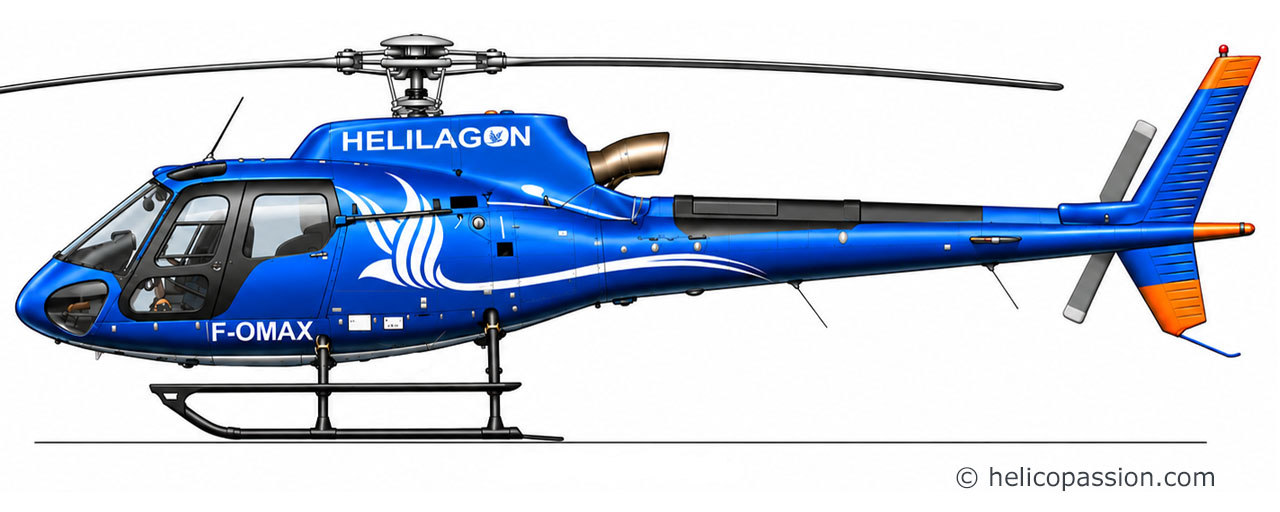
On Réunion Island, steep terrain and isolated settlements make helicopters especially useful. Helilagon uses the Ecureuil for aerial work, including supplying villages in the Cirque de Mafate. The liveries of Helilagon and Mafate Hélicoptères reflect the natural and cultural identity of the island.
 (Photo André Bour - Helicopassion) Helilagon H125 on Réunion Island.
On 19 May 2025, Helicopassion flew aboard Helilagon's AS350 B3 Ecureuil F-OKLG on an open-door photographic flight over the Trou de Fer and the waterfalls of the Takamaka Valley, on Réunion Island.
 (Photo André Bour - Helicopassion)
In the cockpit of Helilagon's AS350 B3 Ecureuil with pilot Jérémy Ouze, approaching the Cirque de Mafate during a photographic flight over Réunion Island.
 (Photo André Bour - Helicopassion)
A view through the open door of Helilagon's Ecureuil over the “Mini-Trou de Fer”, a spectacular site in the Takamaka Valley, accessible only by canyoning.
 (Photo André Bour - Helicopassion) Mafate Hélicoptères AS350 B3 F-OMAB — a livery by Tito Ottavioli featuring the tropicbird.
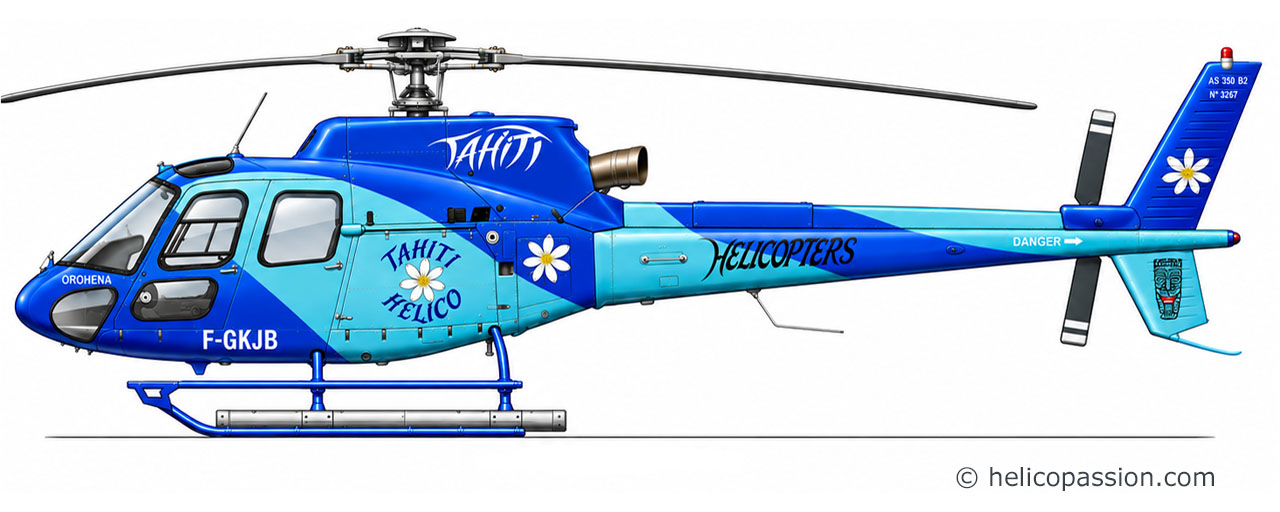
Across the Pacific, the Ecureuil has also been used for sightseeing flights in French Polynesia and Hawaii, offering views of landscapes that are often difficult to access from the ground.
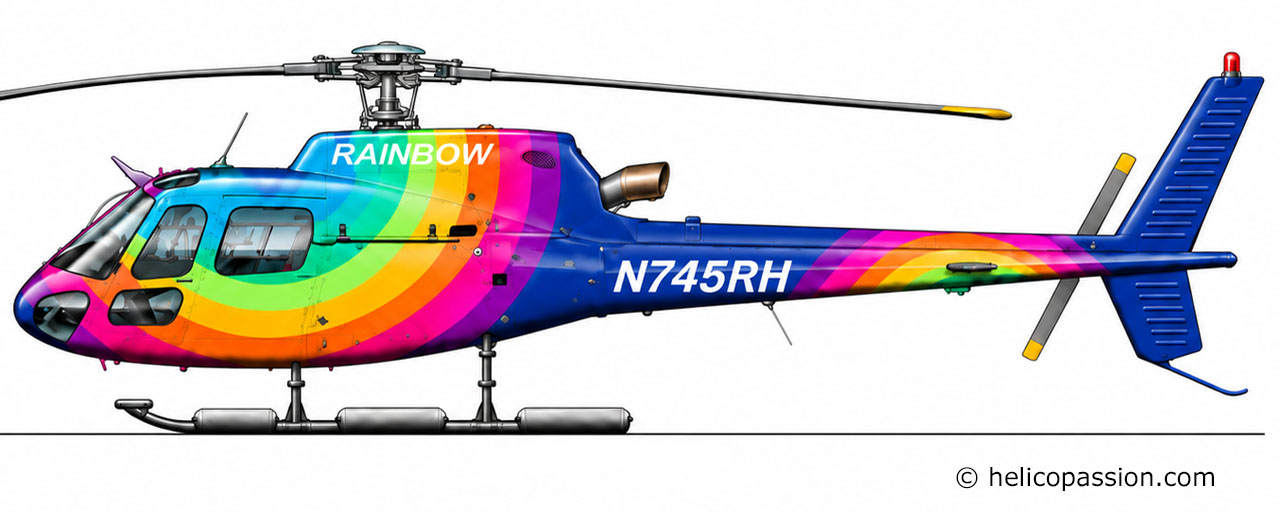
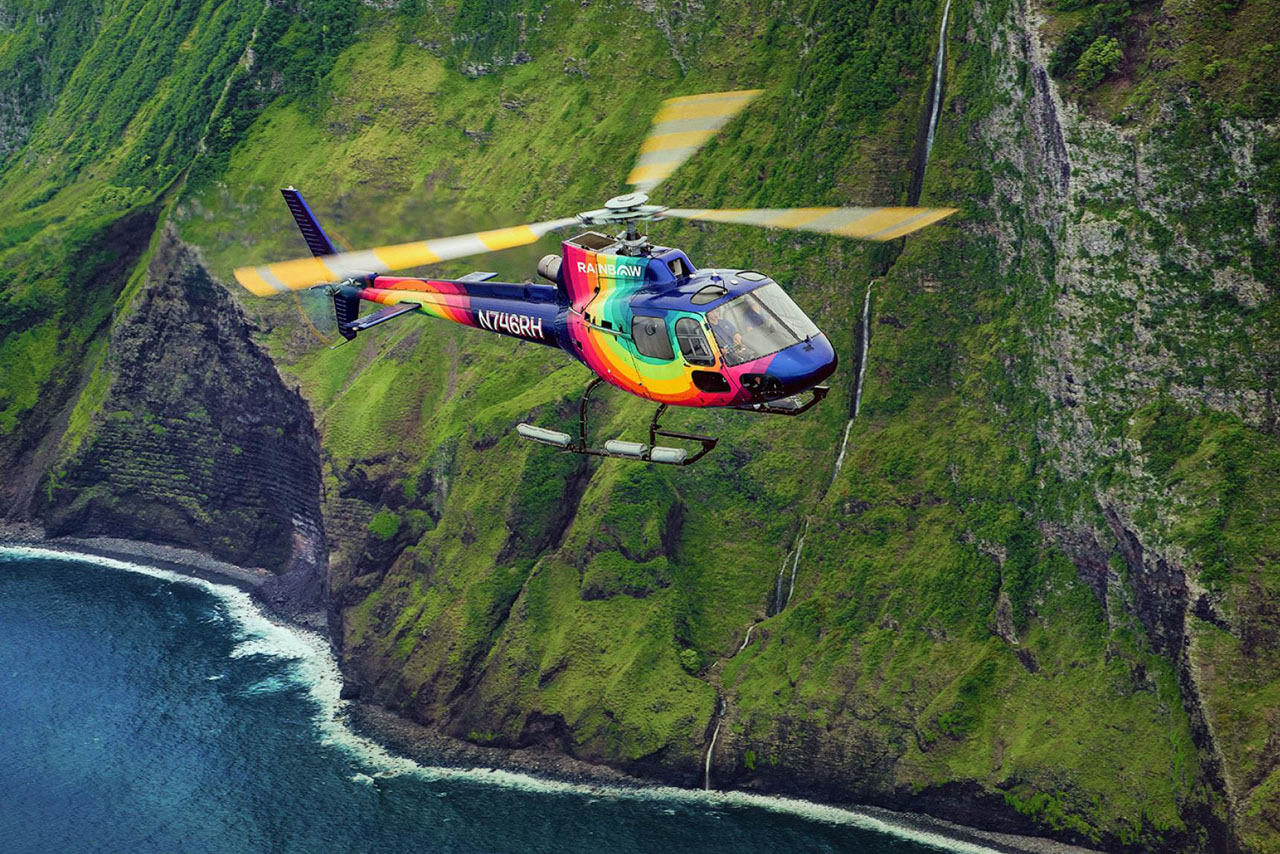 (Photo Rainbow Helicopters) Rainbow Helicopters AS350 B2 AStar N745RH, Hawaii.
The Ecureuil in the Andes
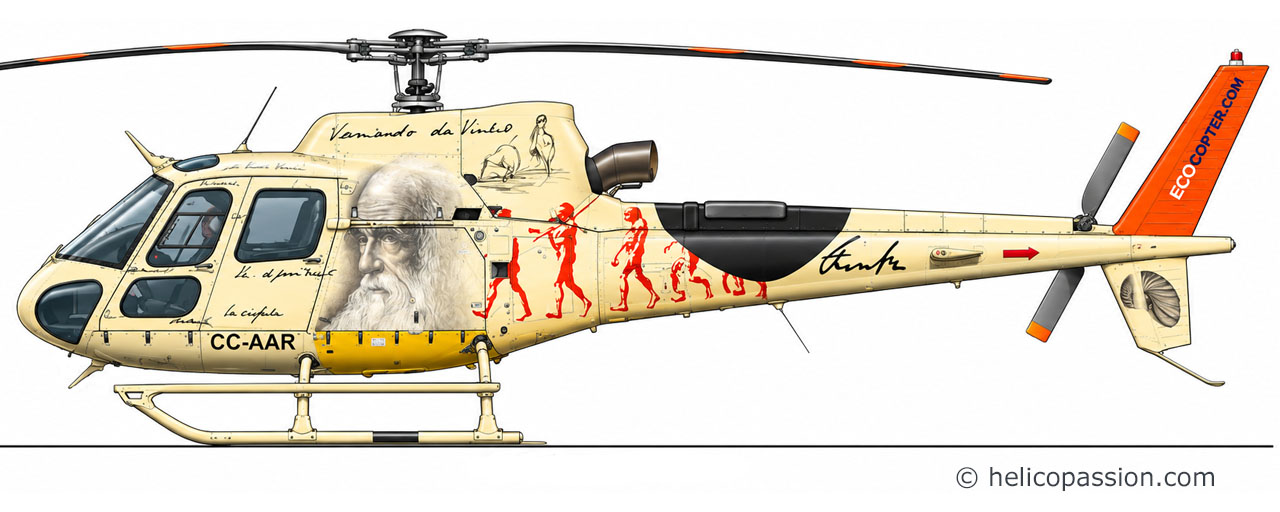
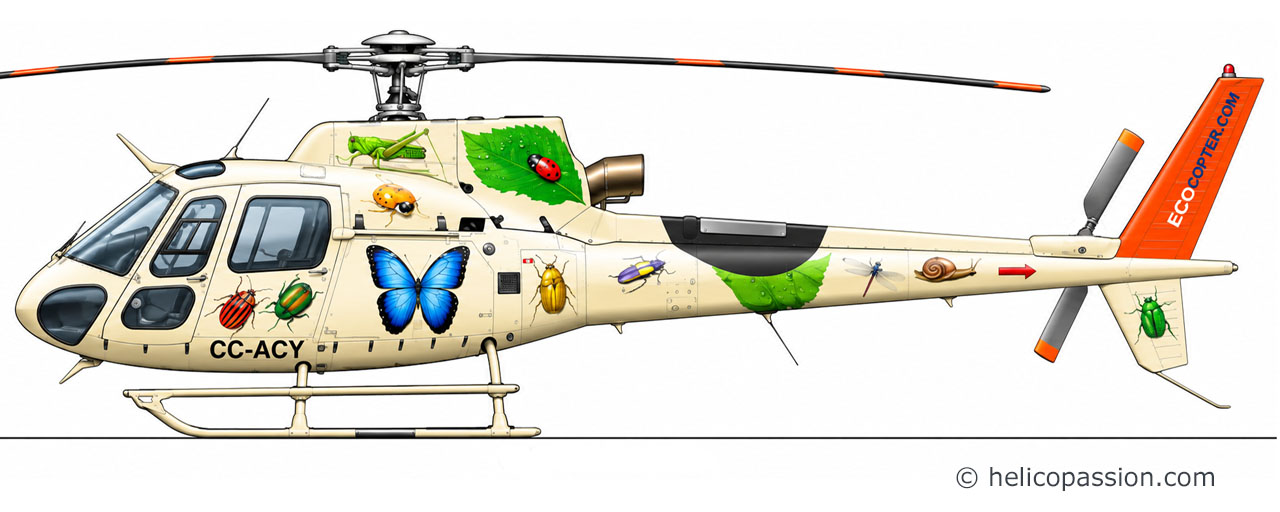
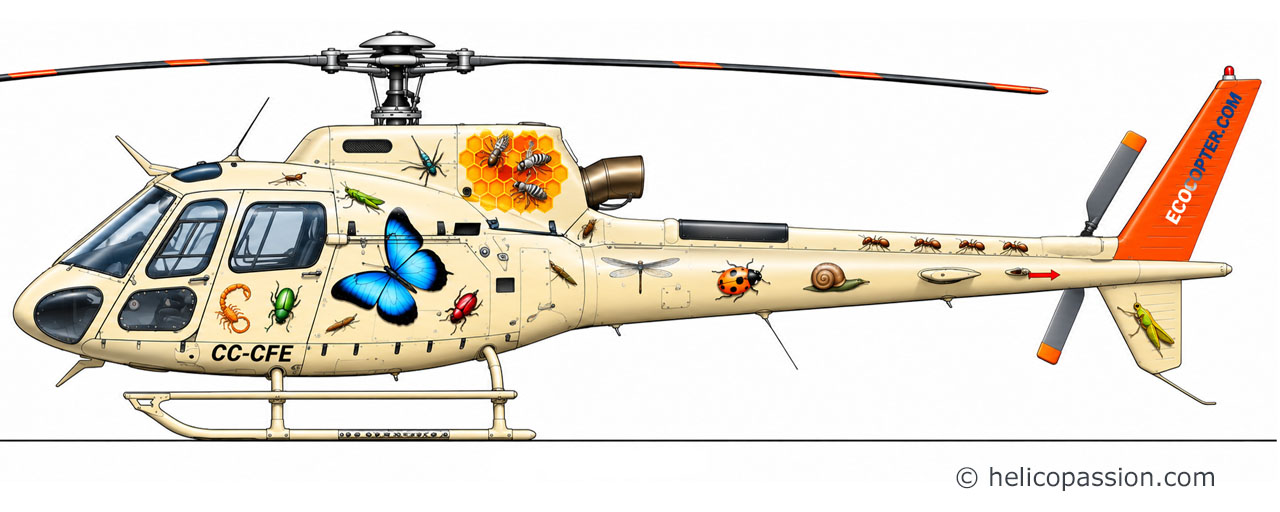
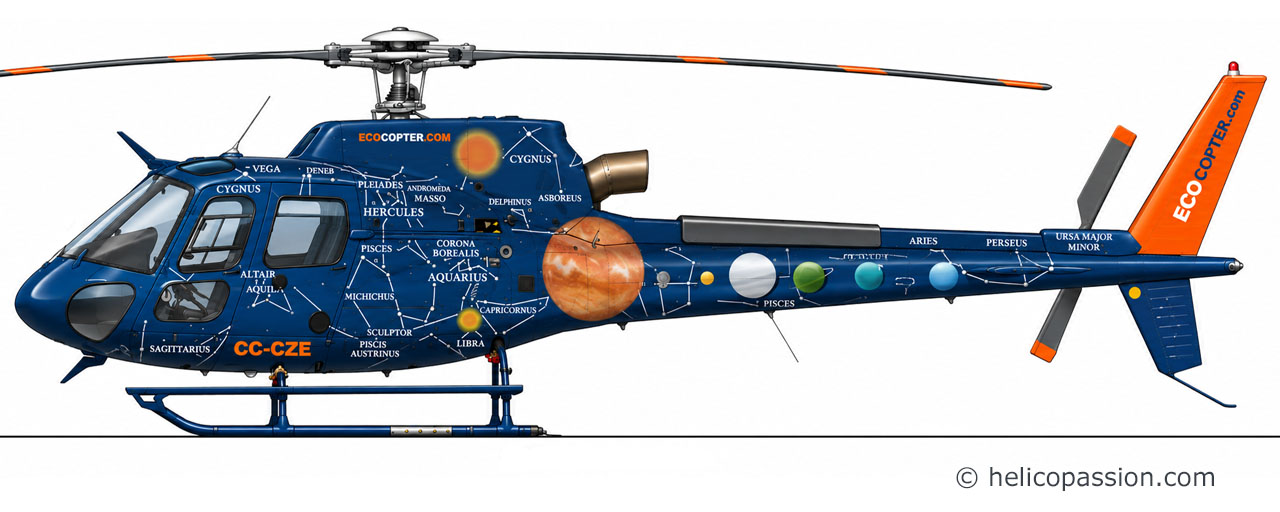
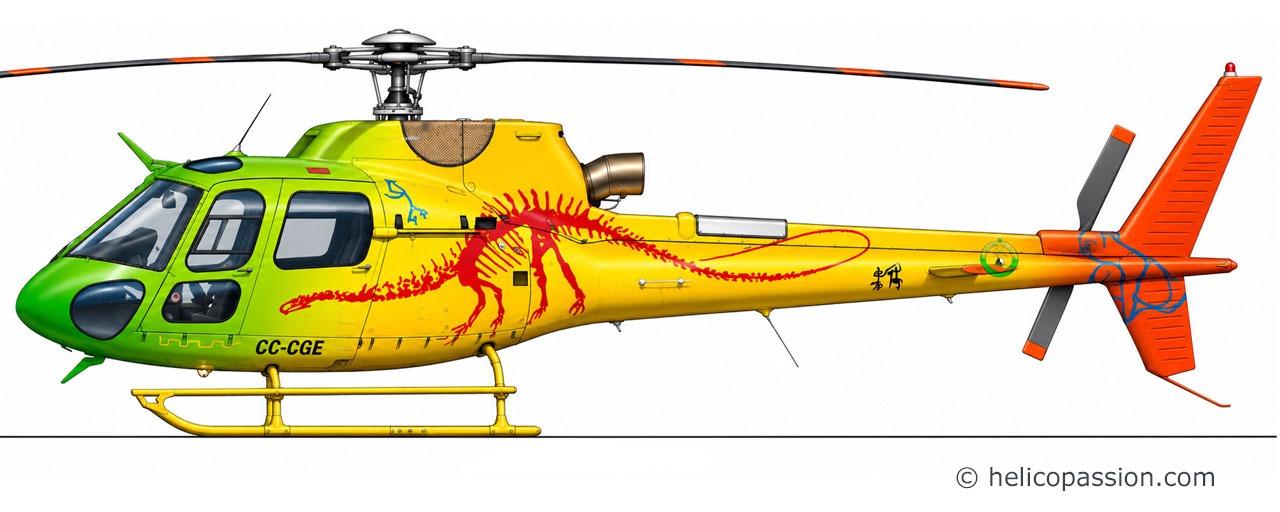
In Chile, Ecocopter combines operations in the Andean environment with distinctive liveries inspired by nature, science and evolution. Its aircraft provide an unusual example of how helicopter liveries can become works of art.
 (Photo Airbus Helicopters) Ecocopter AS350 B3 CC-AAR — Charles Darwin-themed livery.
Civilian operators and distinctive liveries
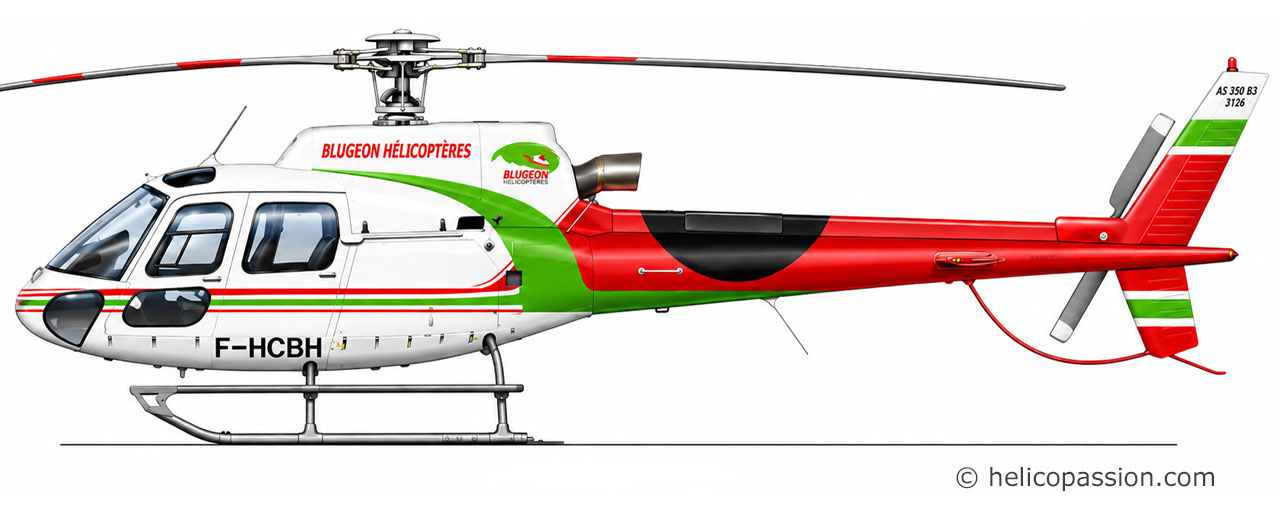
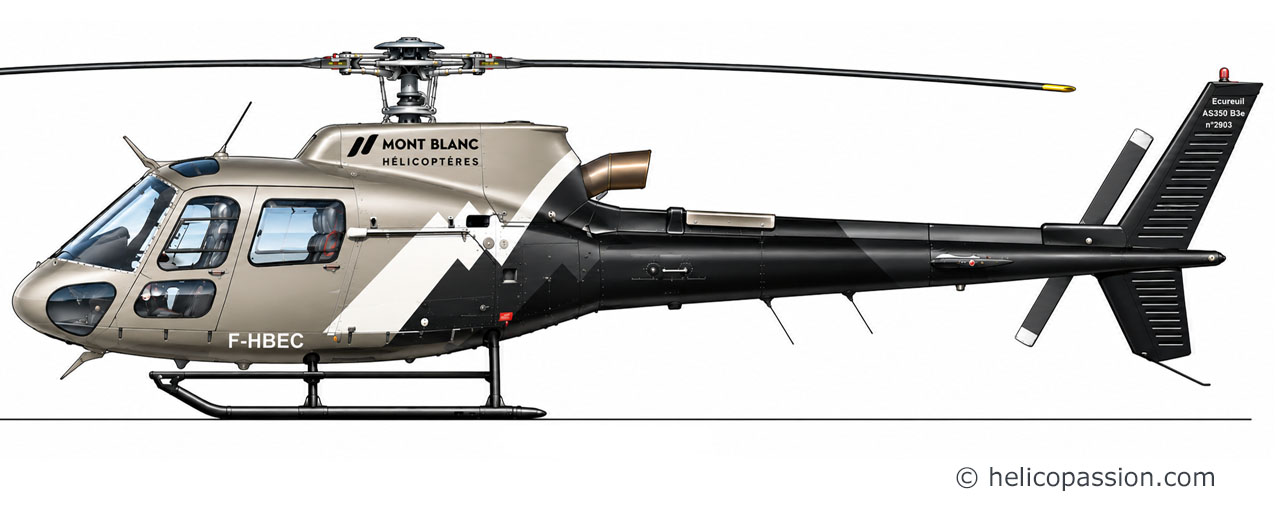
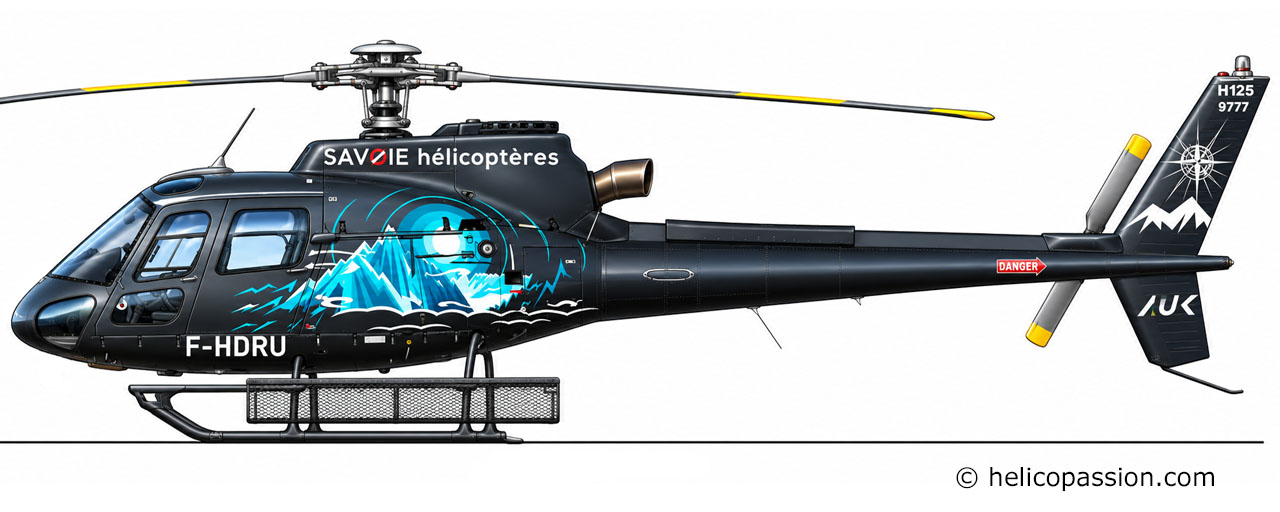
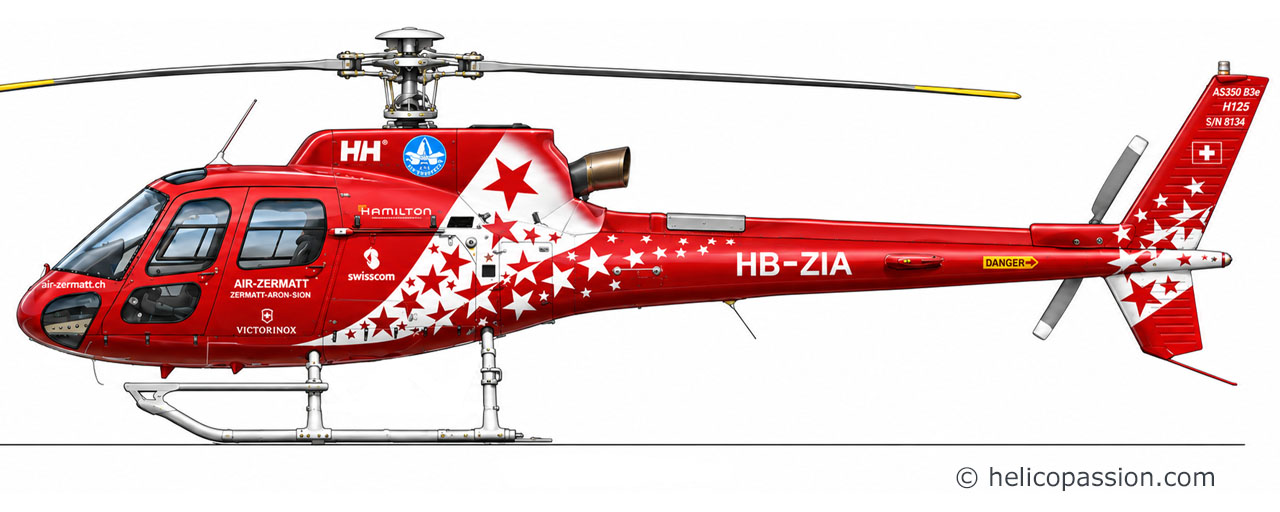
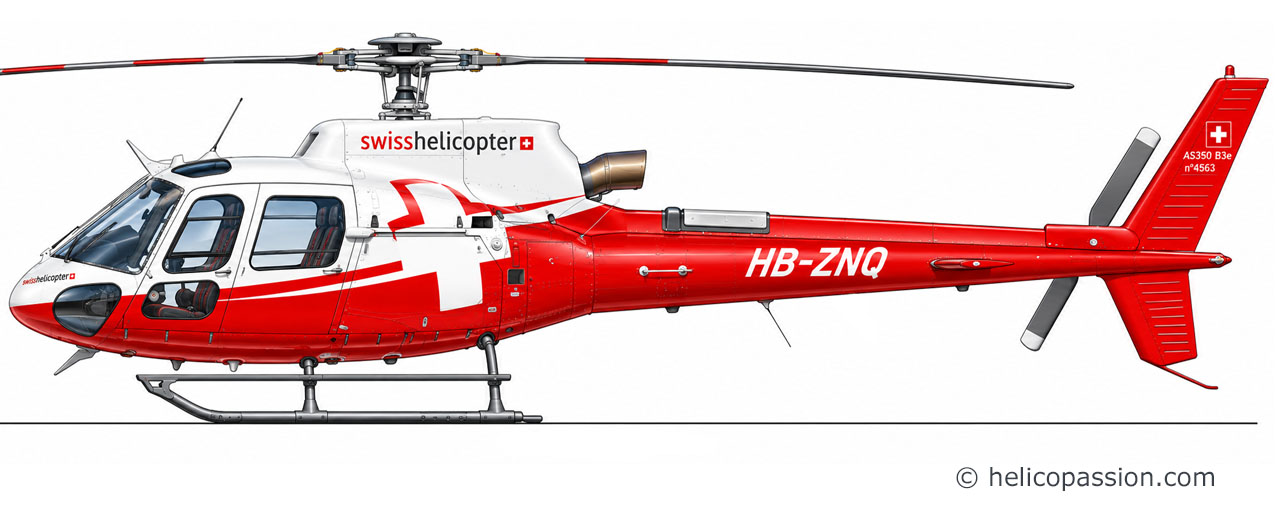
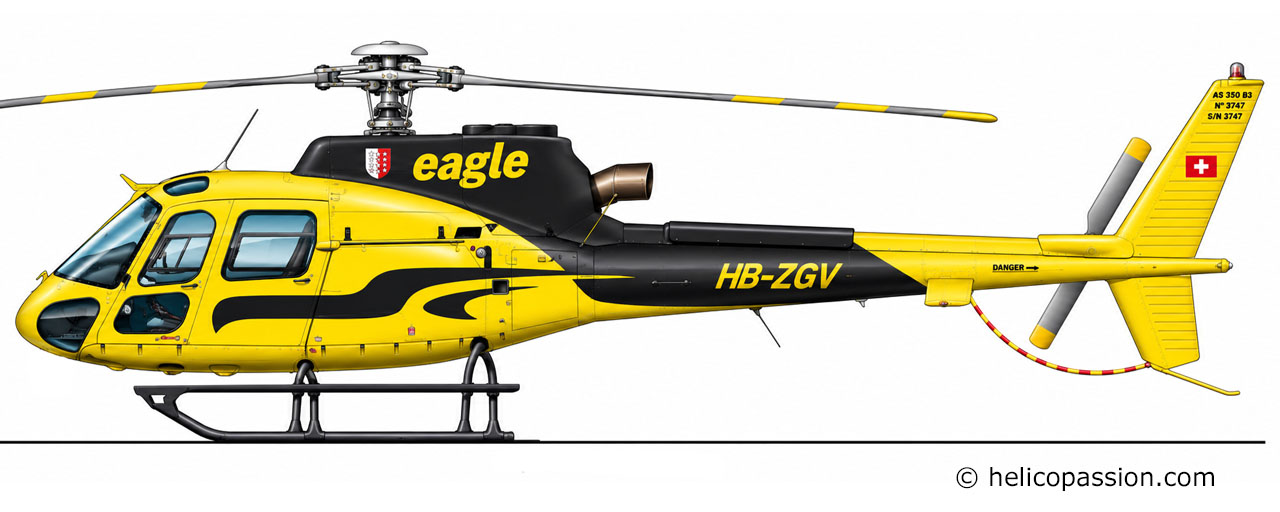
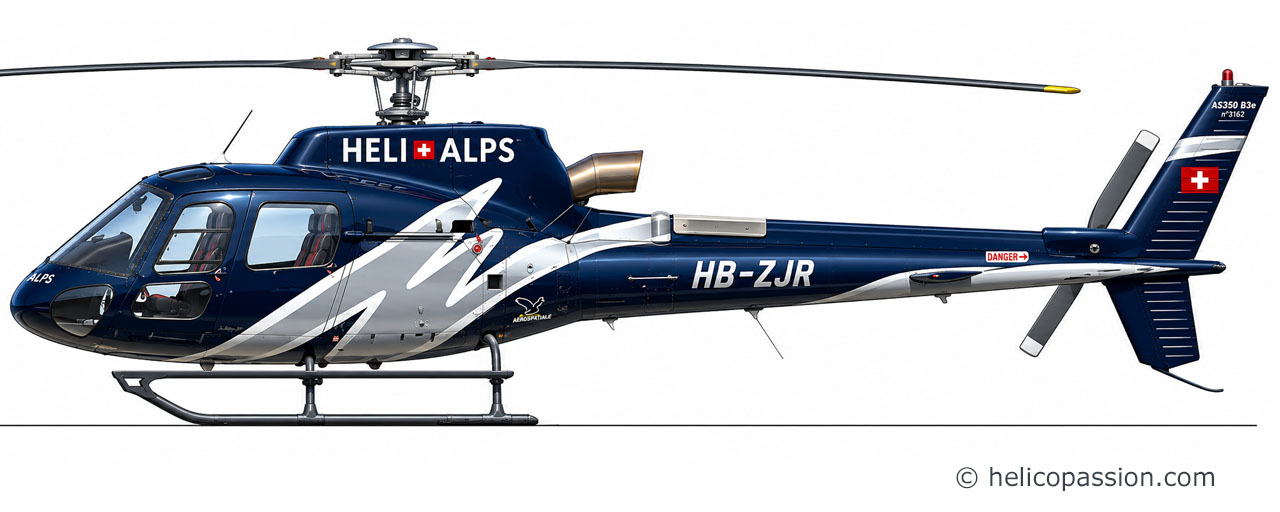
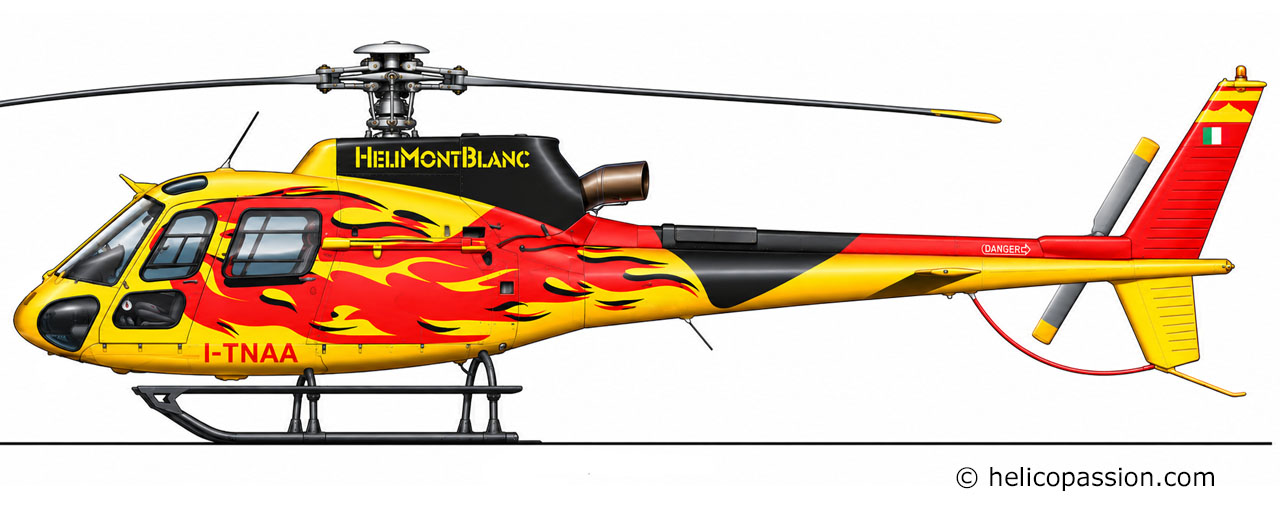
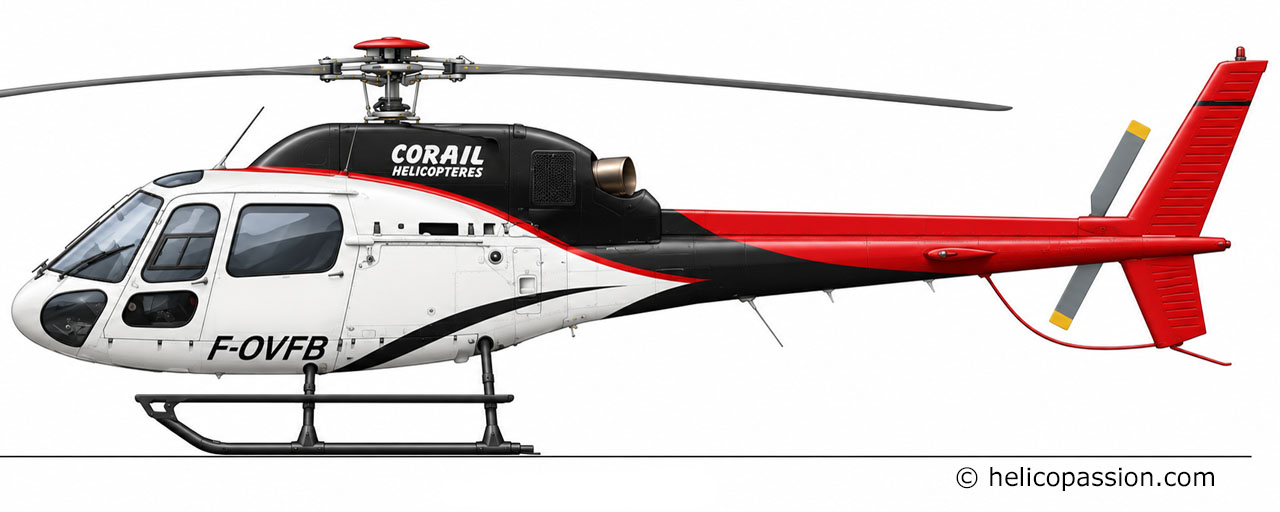
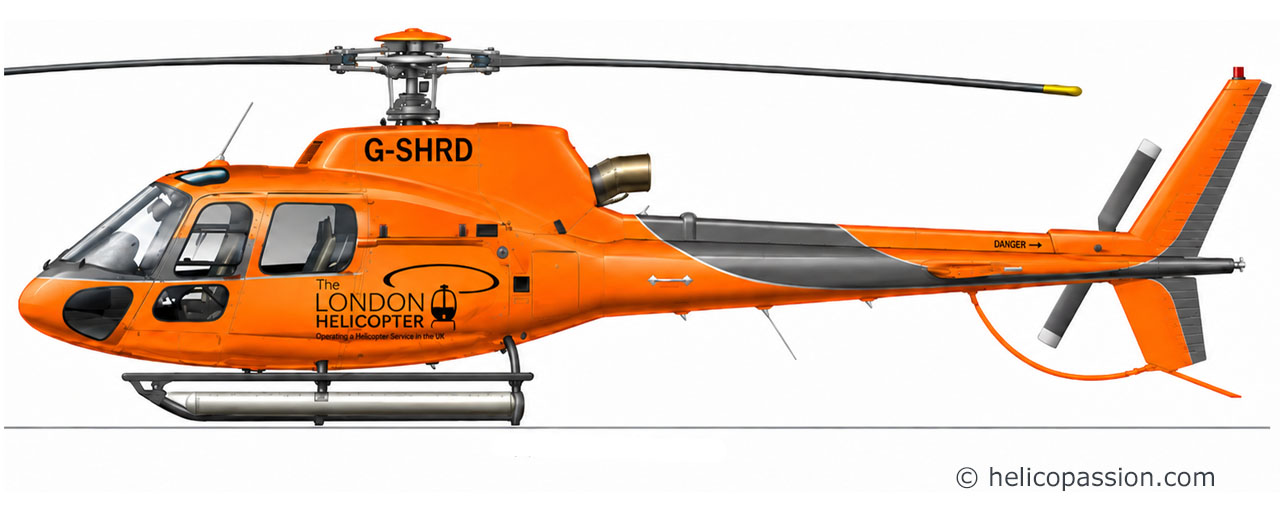
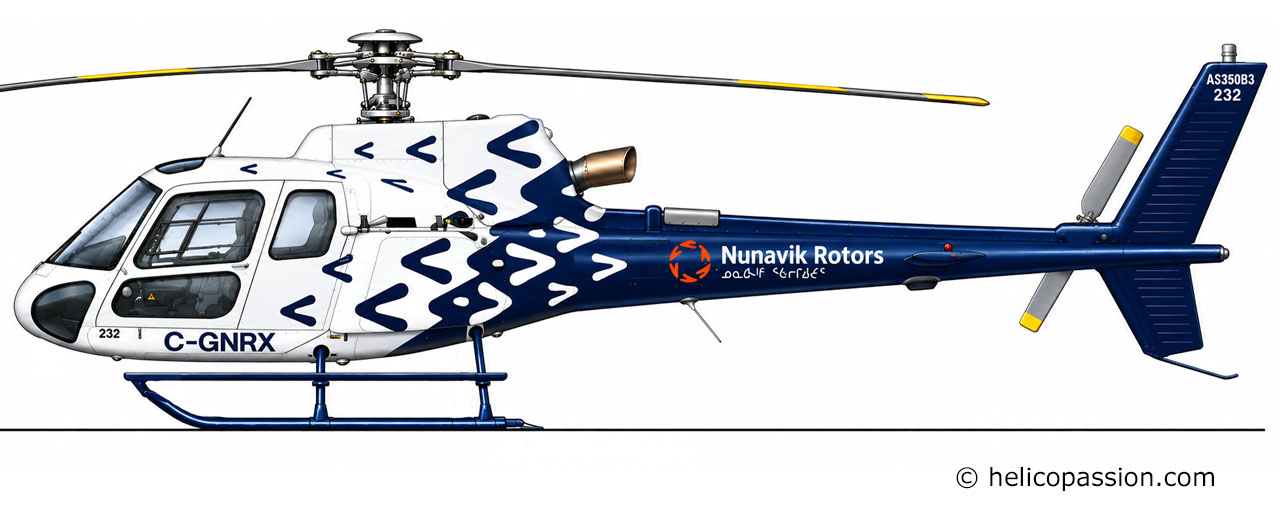
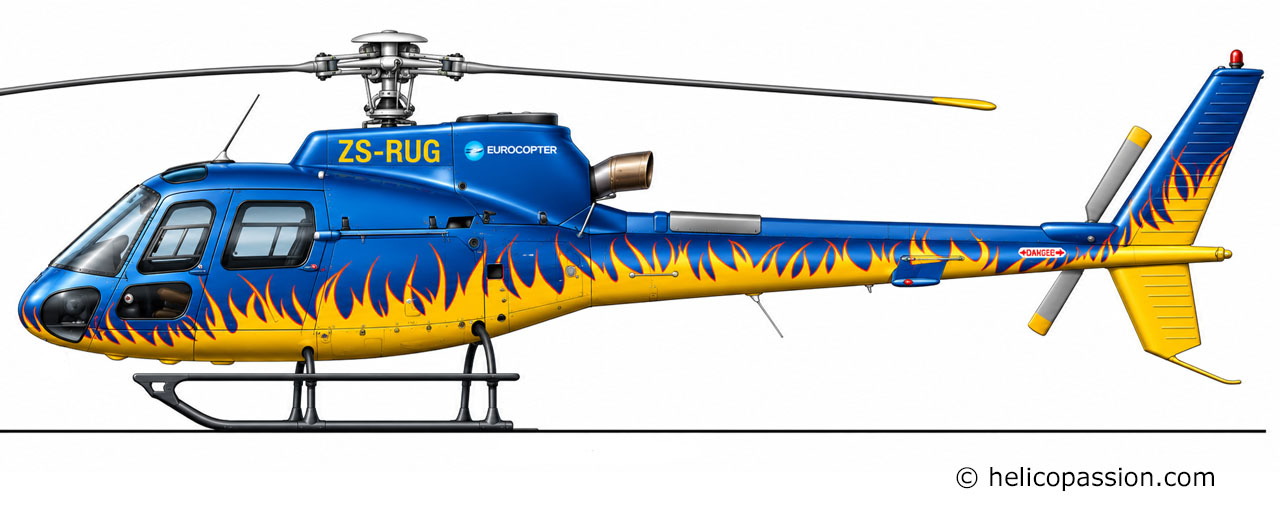
These comparative profile drawings show how the same basic helicopter design has been adapted to different operators. The selection brings together examples from Europe, the Indian Ocean, the Pacific and other regions.
Civilian operators around the world
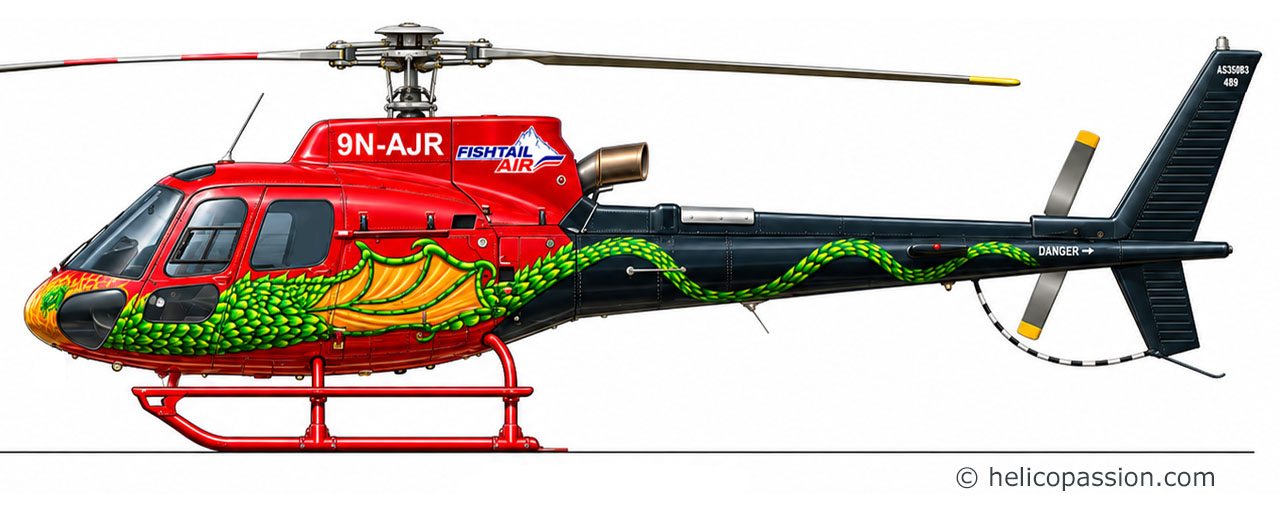
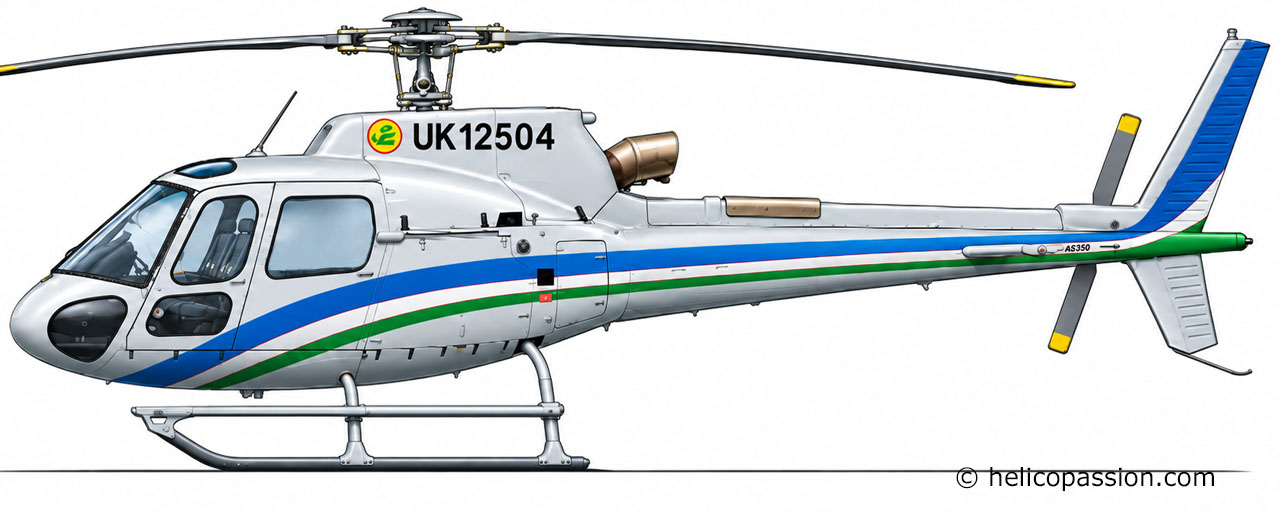
Flying colours — distinctive liveries
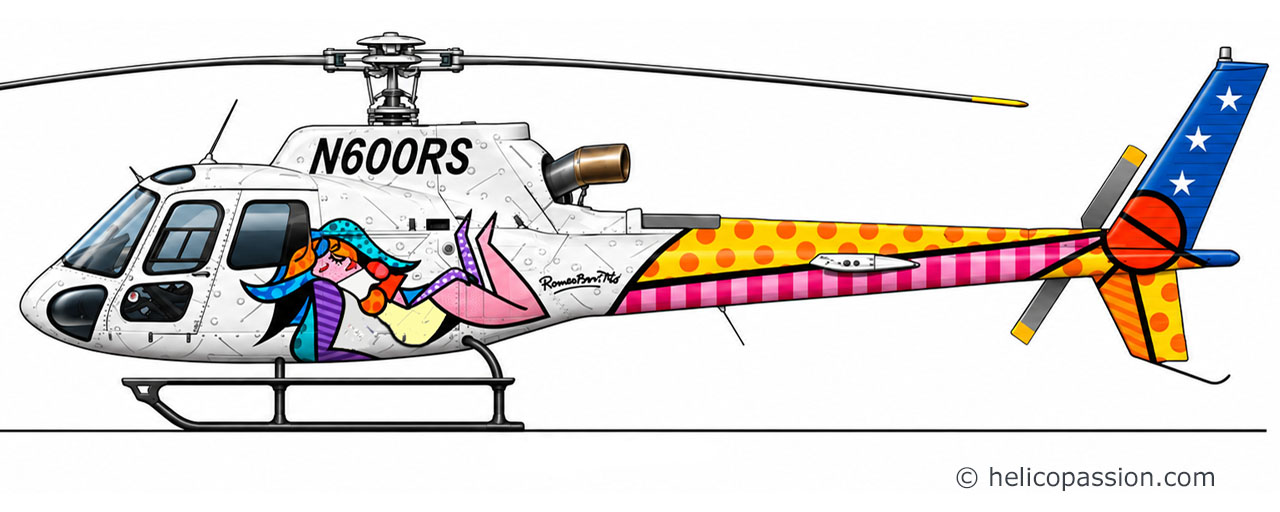
From the artwork of Tito Ottavioli and Charlie Adam to the nature-inspired designs of Ecocopter, some Ecureuil helicopters are instantly recognisable by their colours. This collection of profile drawings highlights the remarkable diversity of operators and liveries across the Ecureuil family.
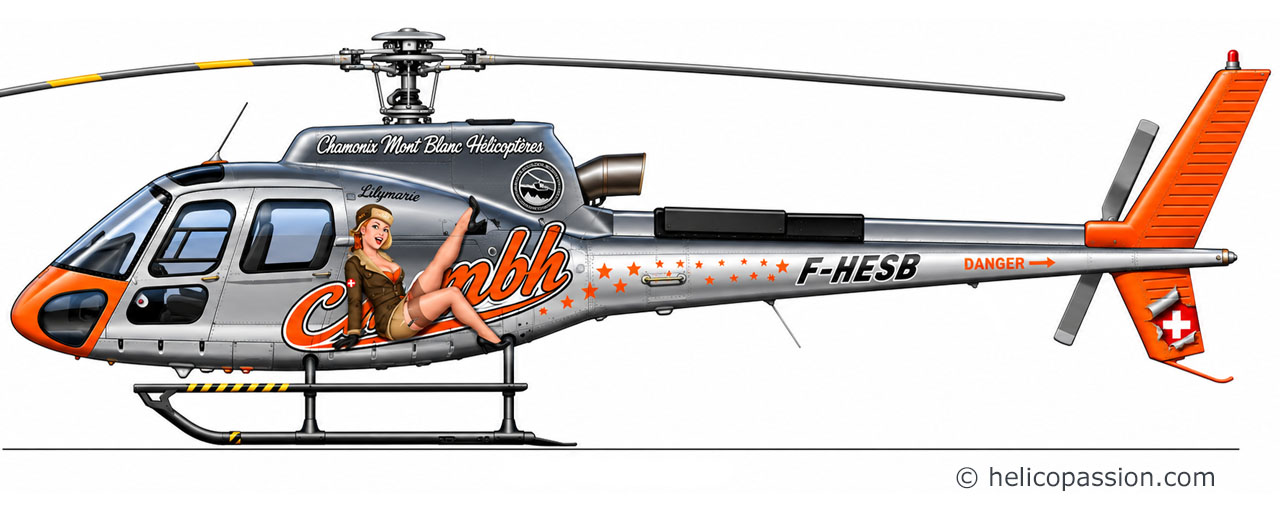
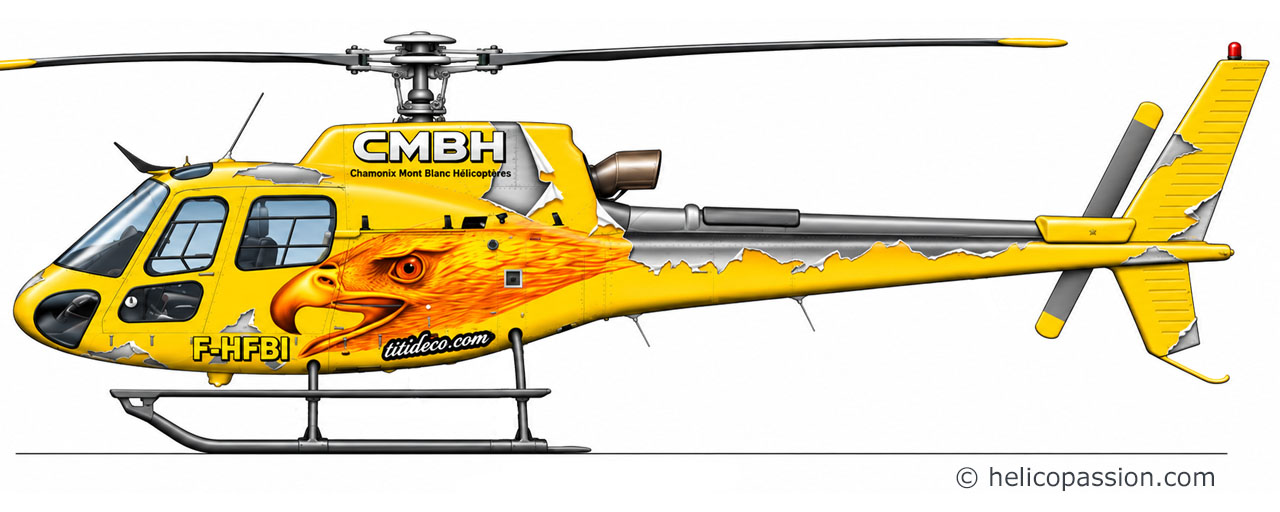
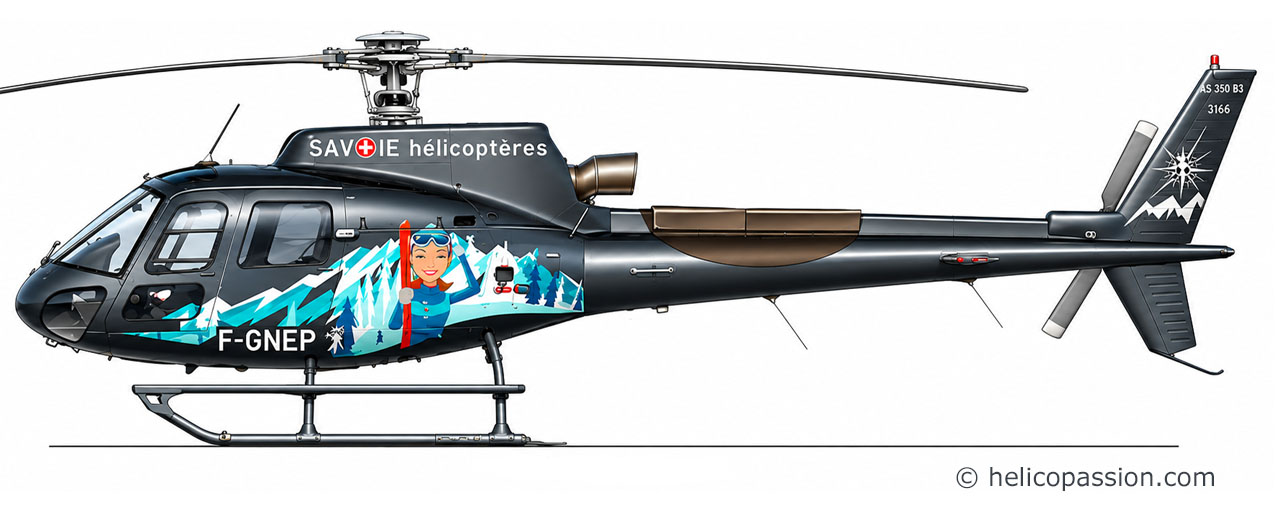
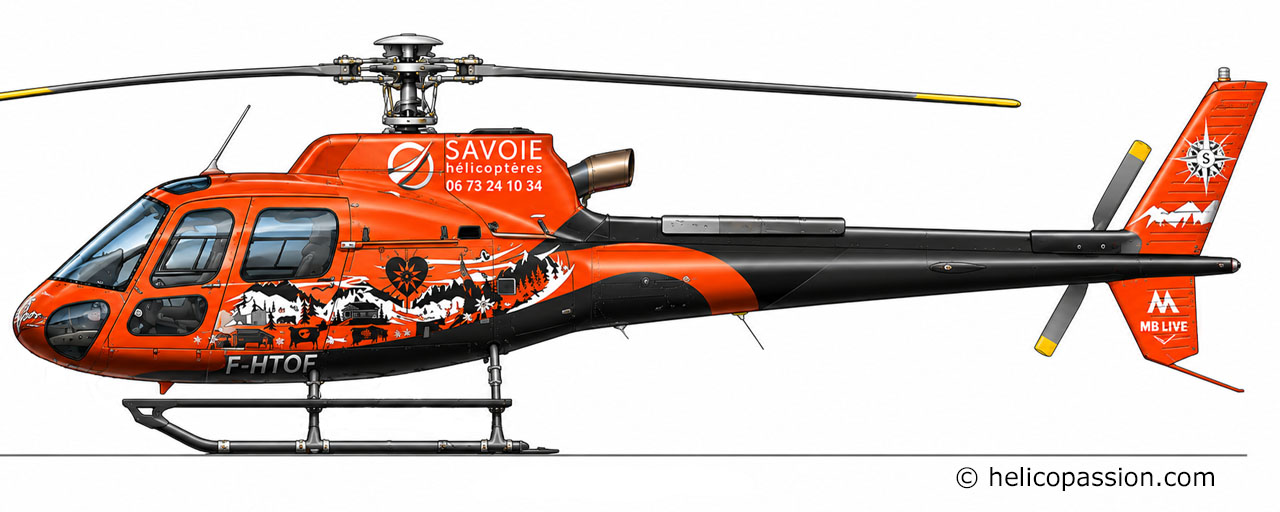
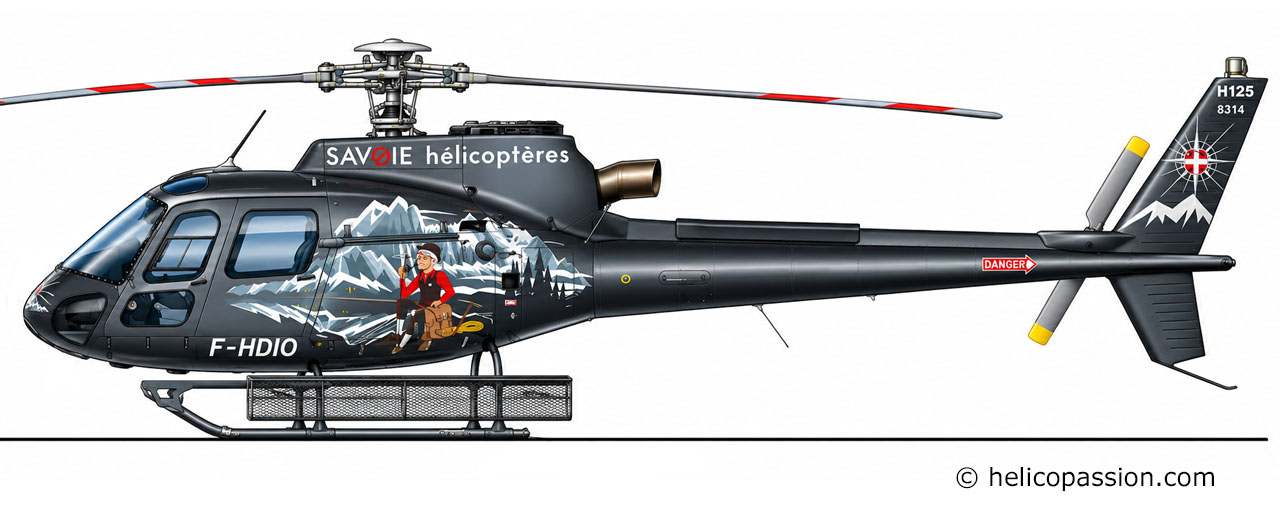
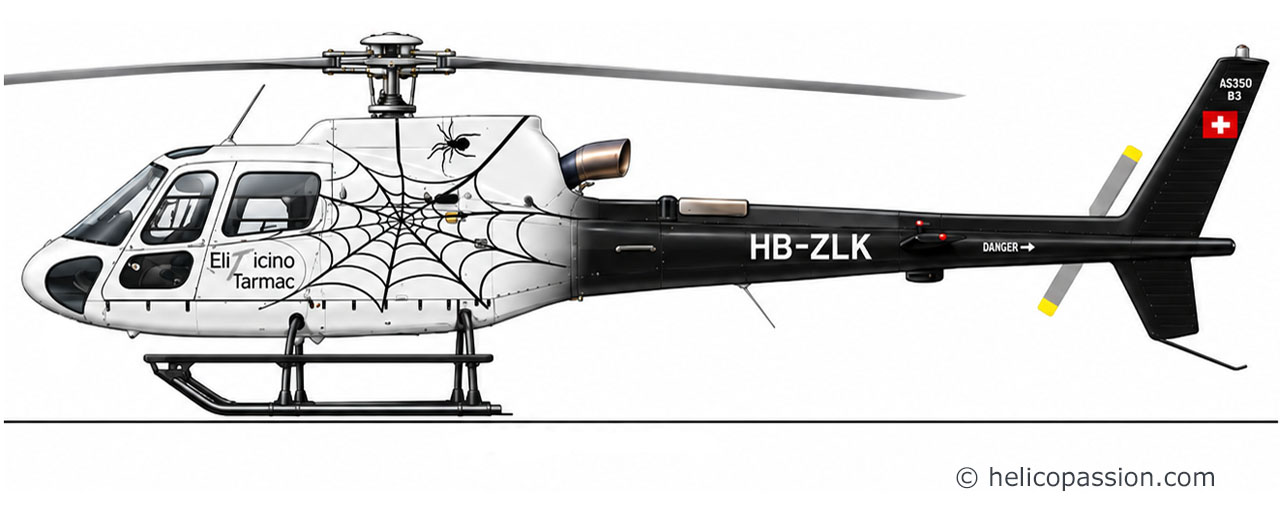
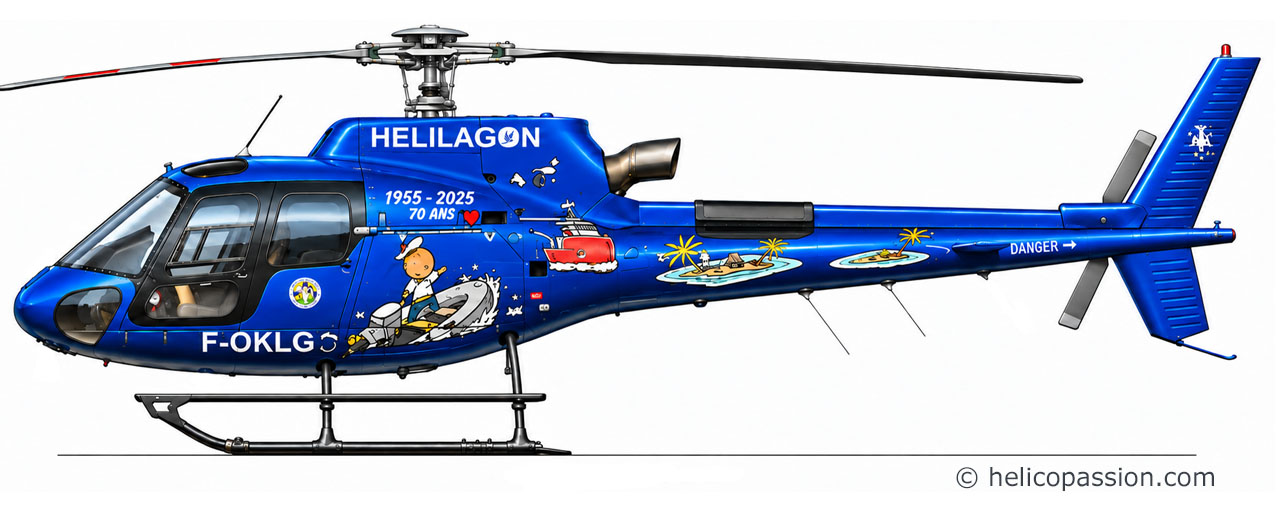 (Helicopassion profile drawing with AI)
Helilagon — F-OKLG, artwork by Jace for the 70th anniversary of the French Southern and Antarctic Lands
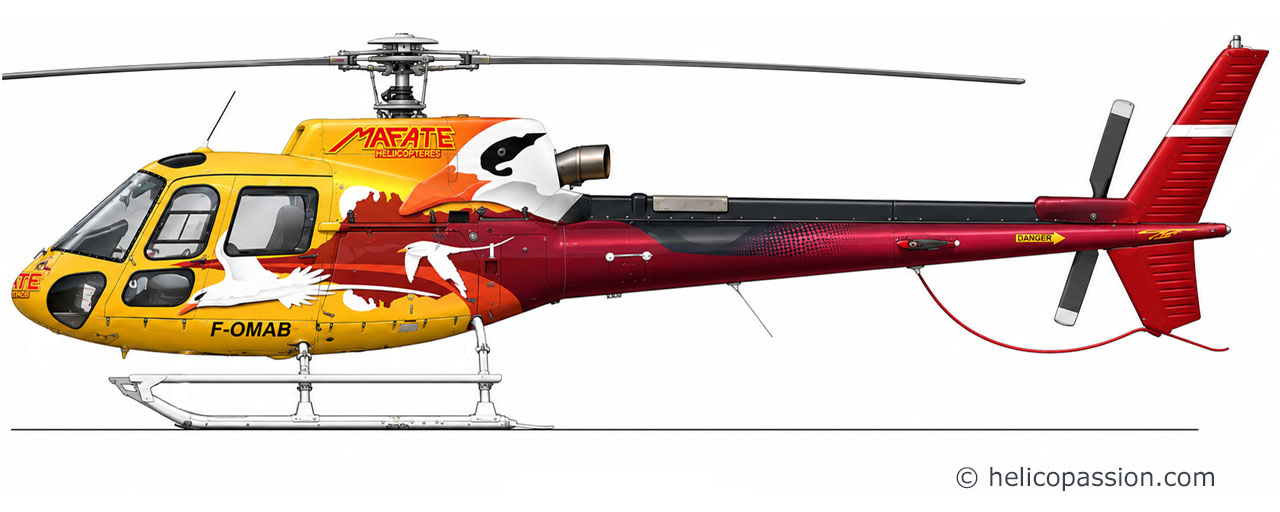 (Helicopassion profile drawing with AI)
Mafate Hélicoptères — F-OMAB, tropicbird artwork by Tito Ottavioli
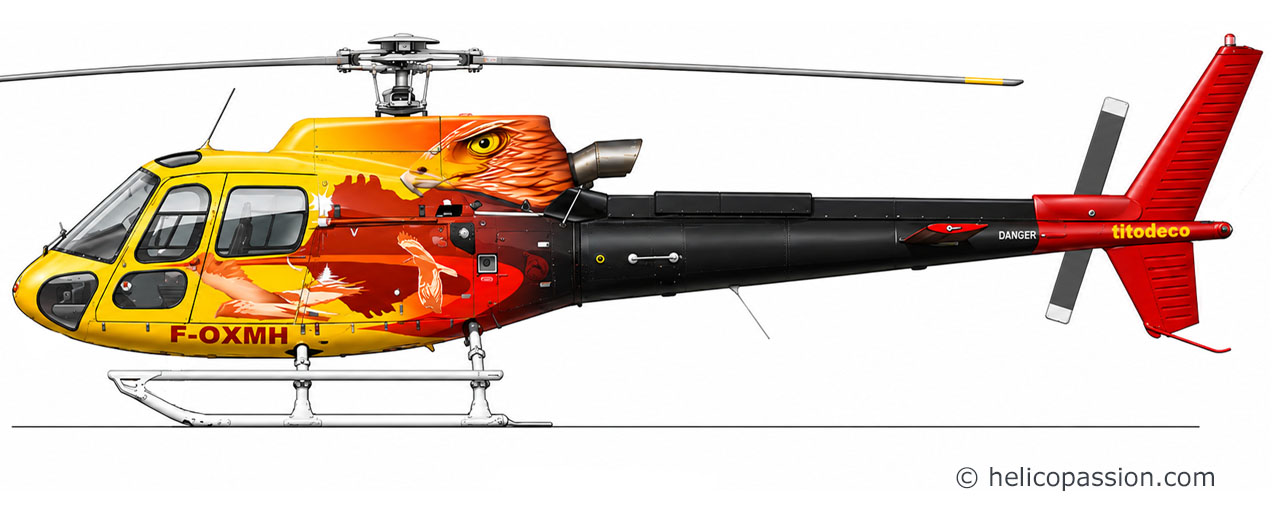 (Helicopassion profile drawing with AI)
Mafate Hélicoptères — F-OXMH, Réunion harrier artwork by Tito Ottavioli
Law enforcement and rescue
Brazil — the Esquilo
Manufactured locally by Helibras, the Esquilo has served Brazilian state police forces since the 1980s. Its missions include aerial surveillance, support for ground operations and rescue. Some units use external steps or carry officers at the open cabin doors to enable rapid deployment.
 (Photo Raphael Albrecht) Paraná Civil Police HB350 B2 Esquilo PT-HZF, Brazil.
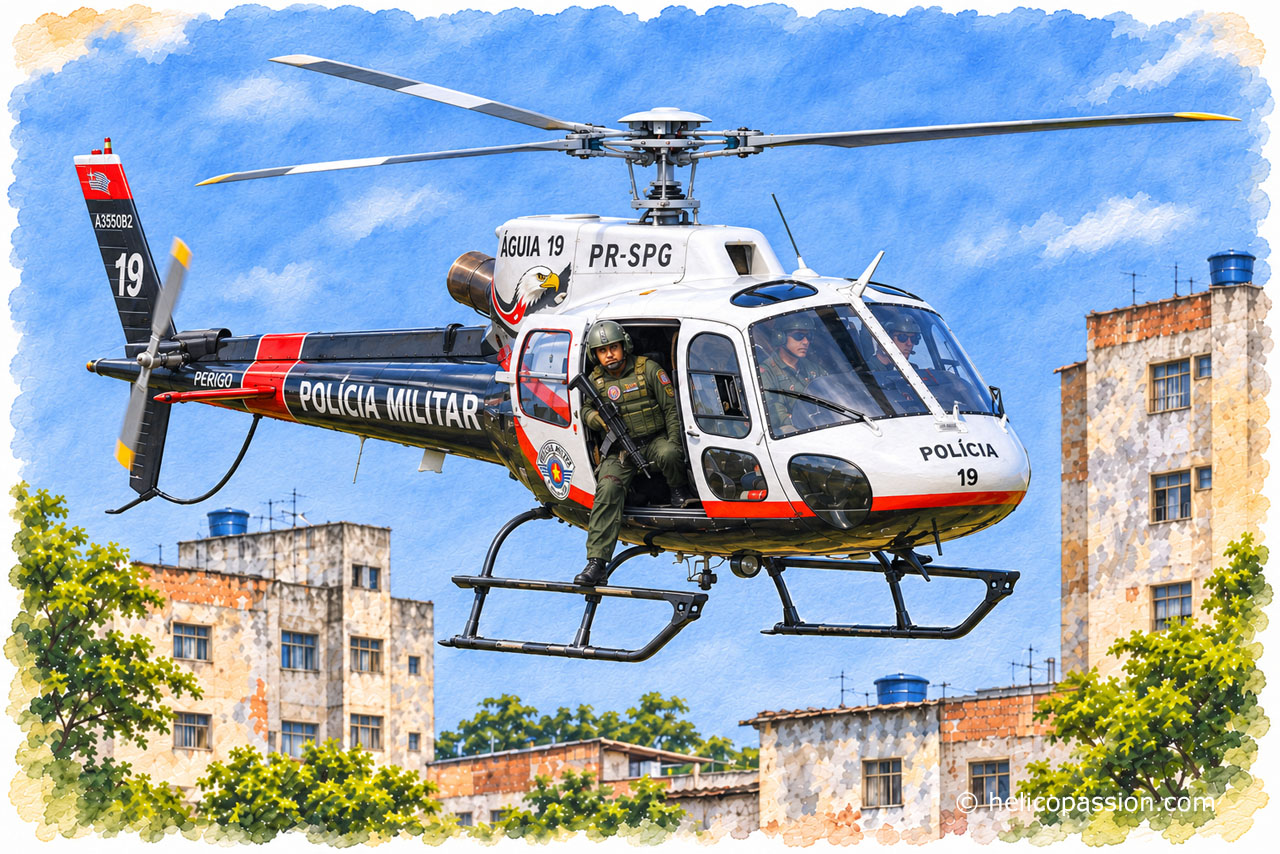 (Illustration Helicopassion with AI) AS350 B2 Esquilo PR-SPG of the São Paulo State Military Police (Polícia Militar do Estado de São Paulo), Brazil, callsign Águia 19, operating in an urban environment.
United States — the AStar and H125
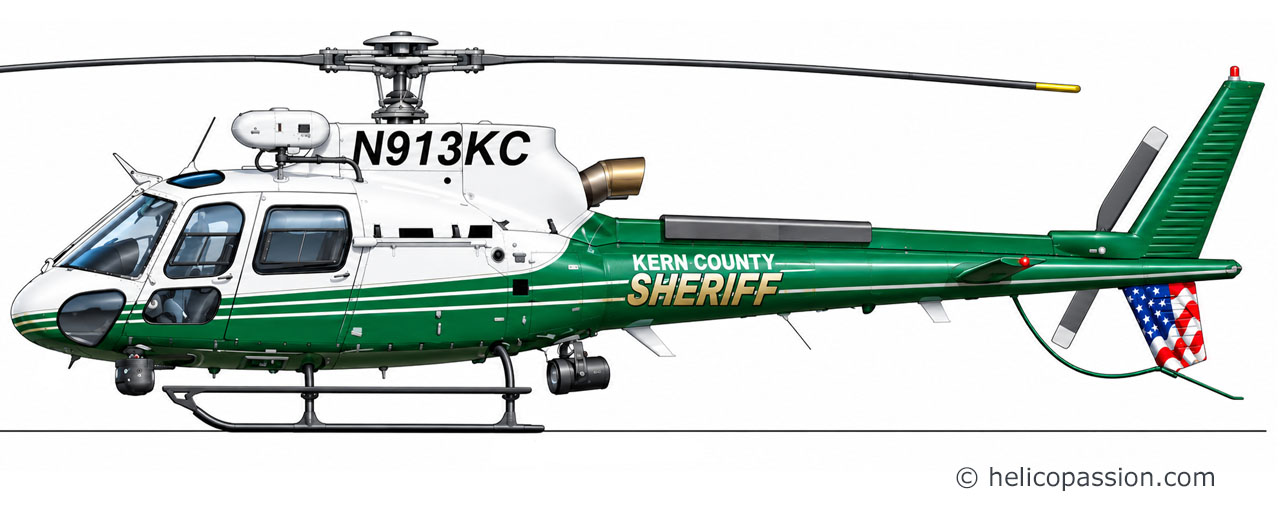
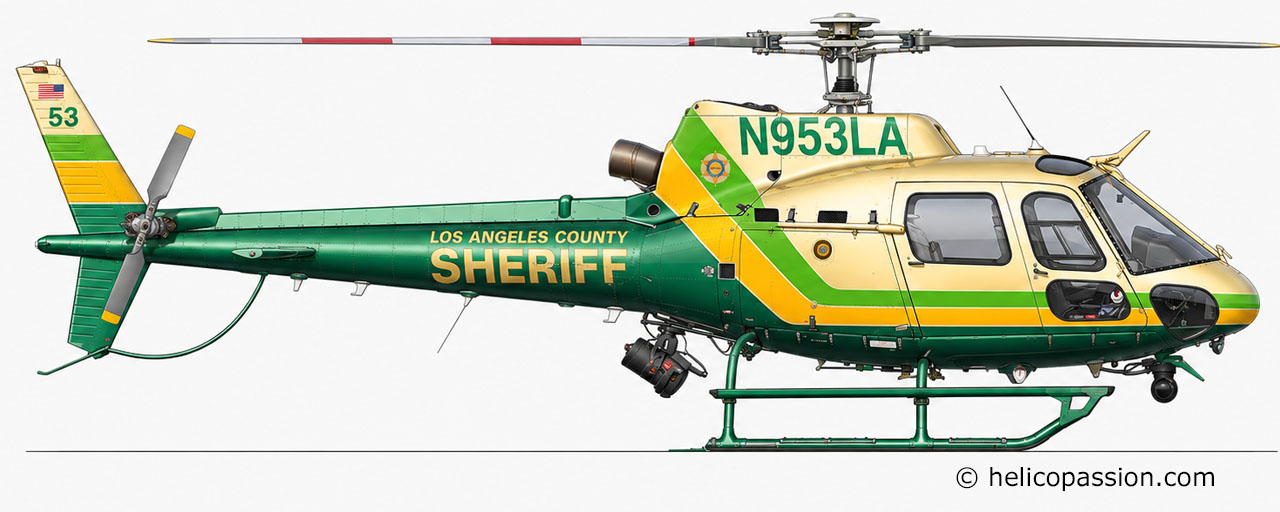
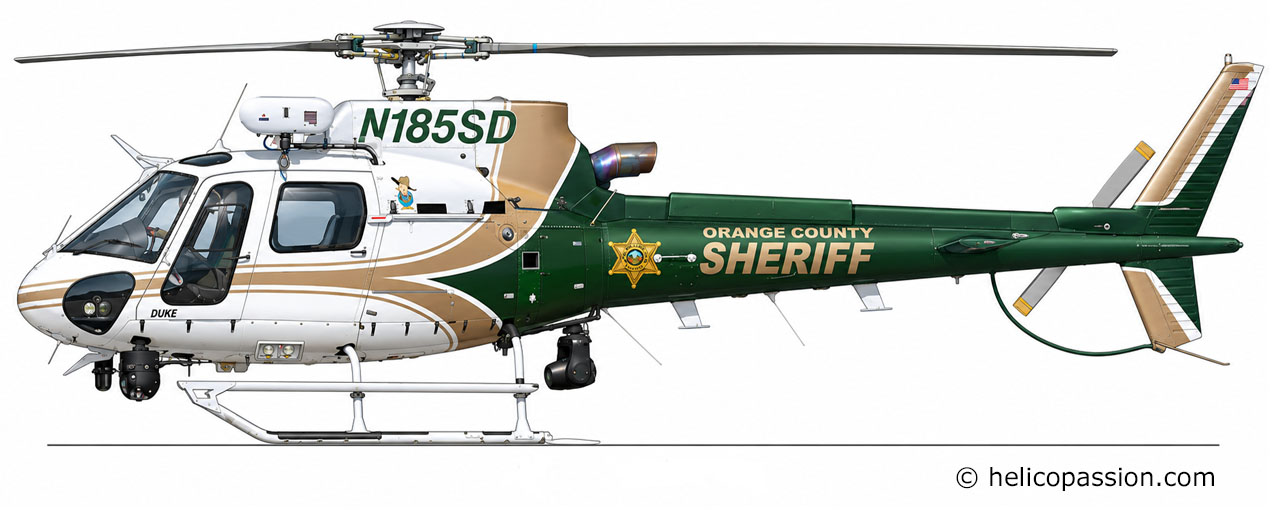
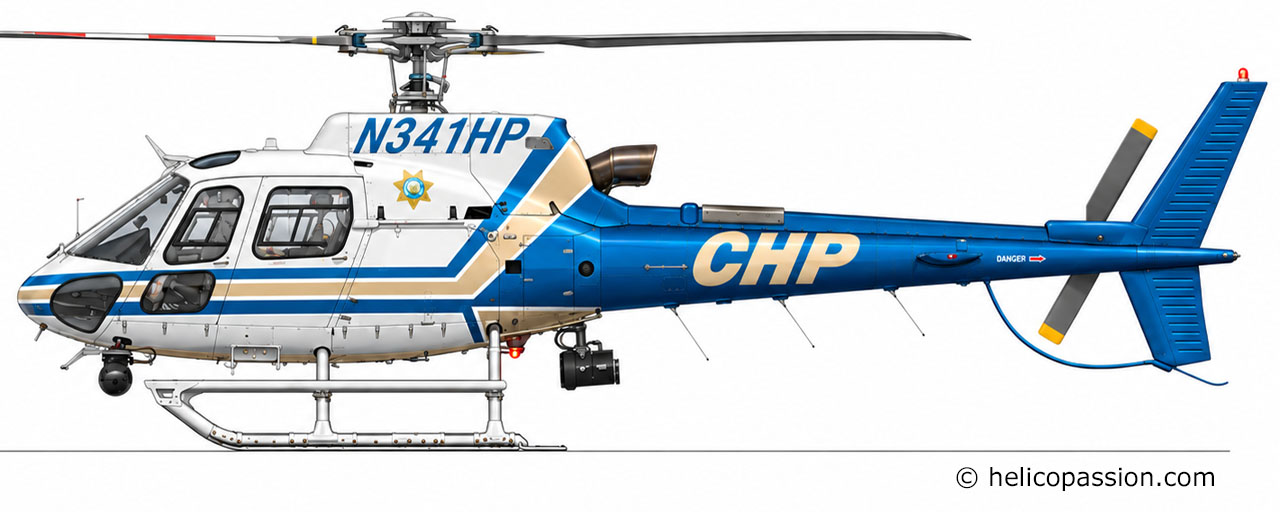
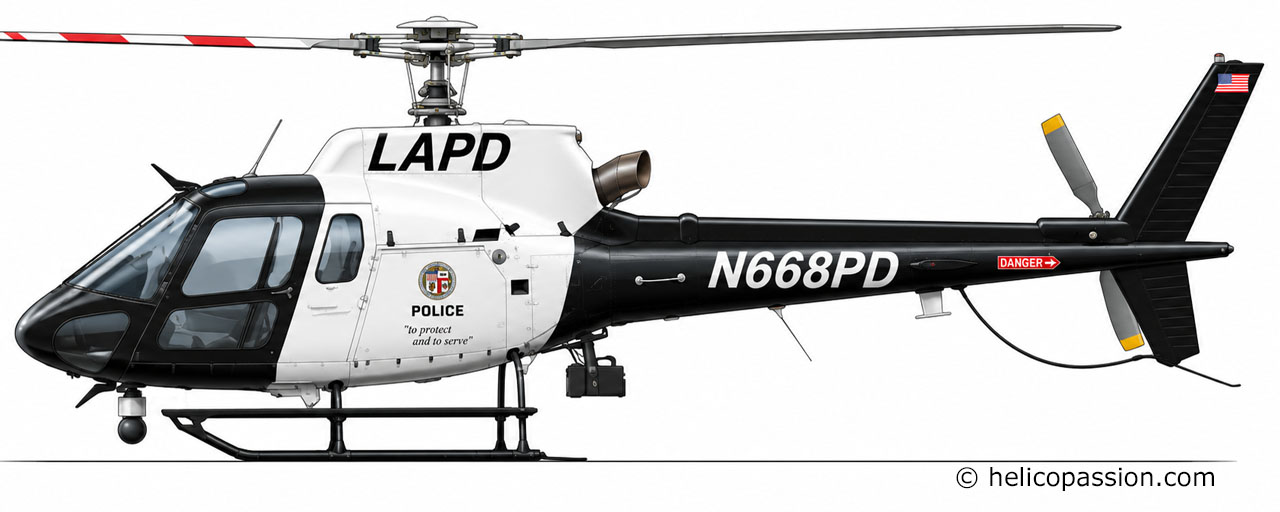
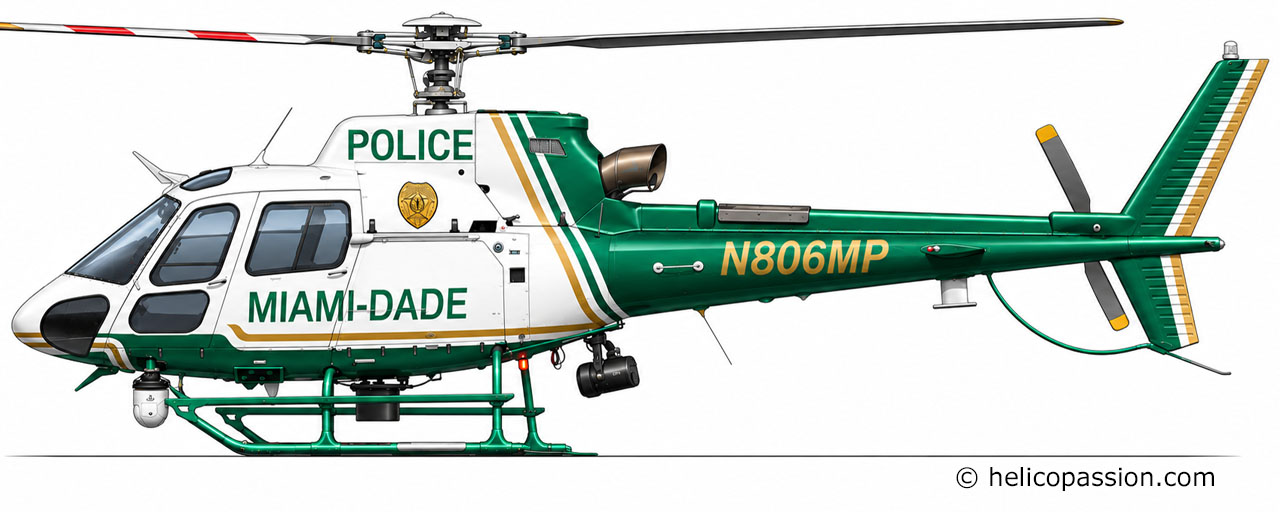
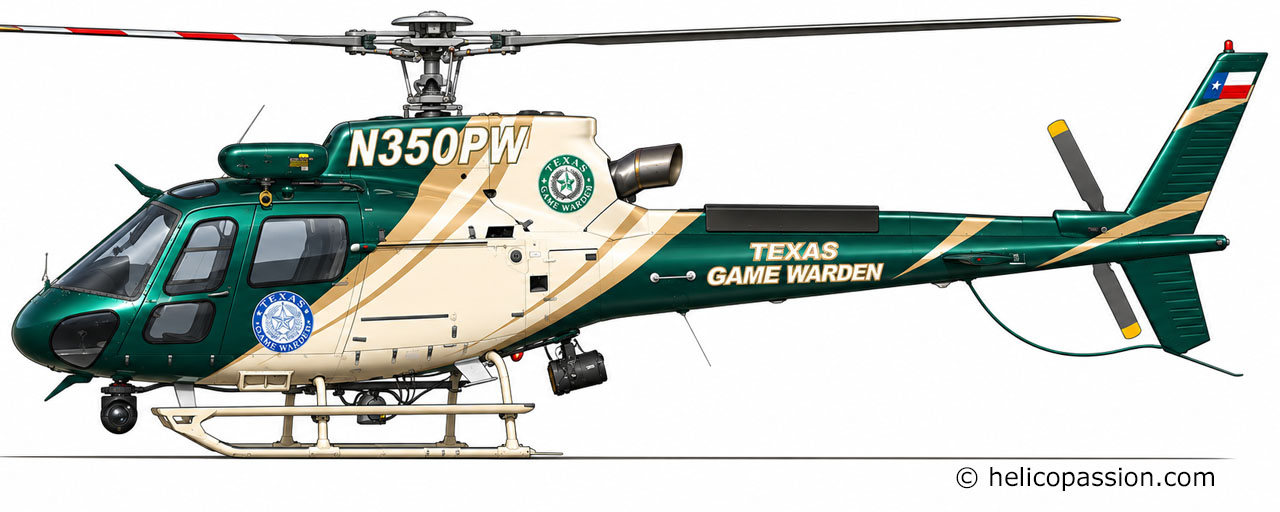
In the United States, police departments, county sheriff's offices and highway patrol units use the AStar and the H125 for surveillance, searches and support to ground teams.
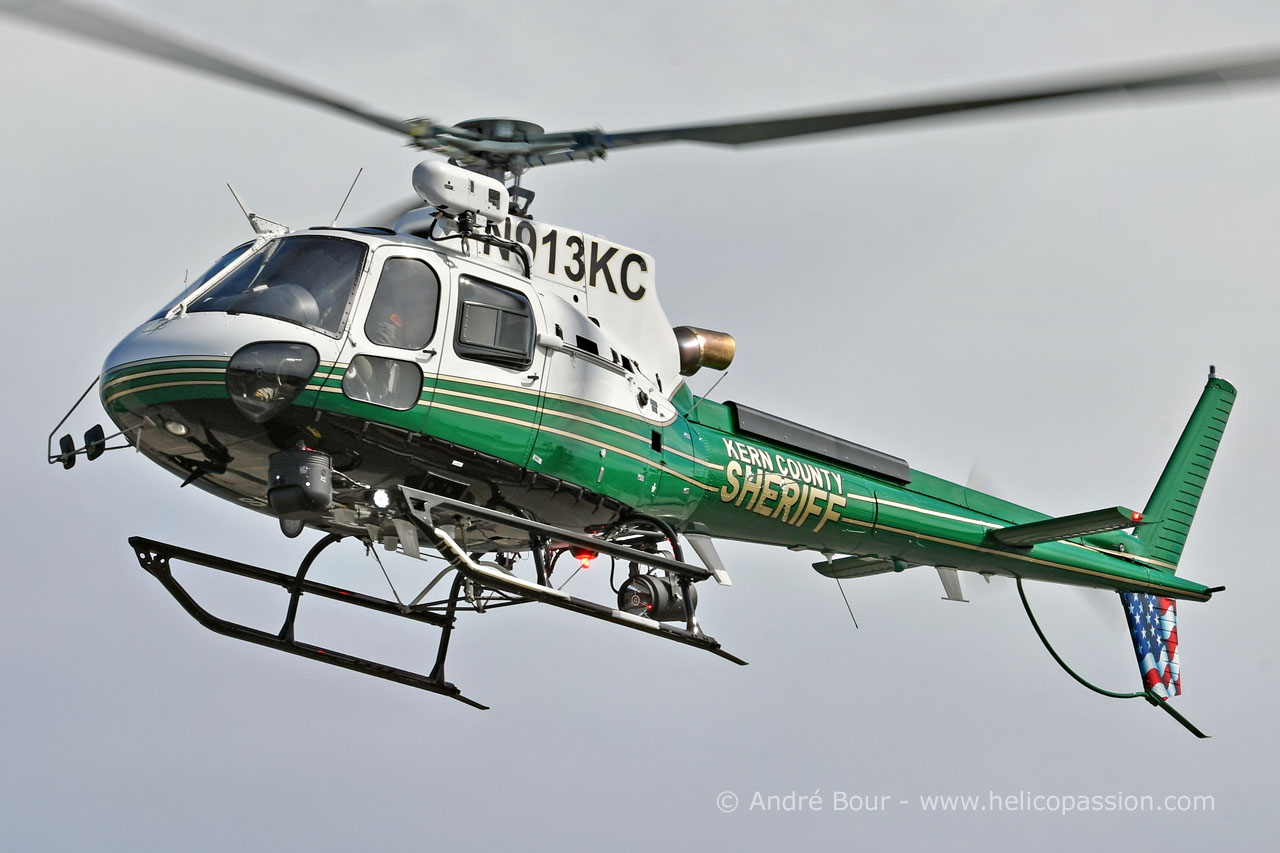 (Photo André Bour - Helicopassion) Kern County Sheriff’s Office H125 N913KC, California.
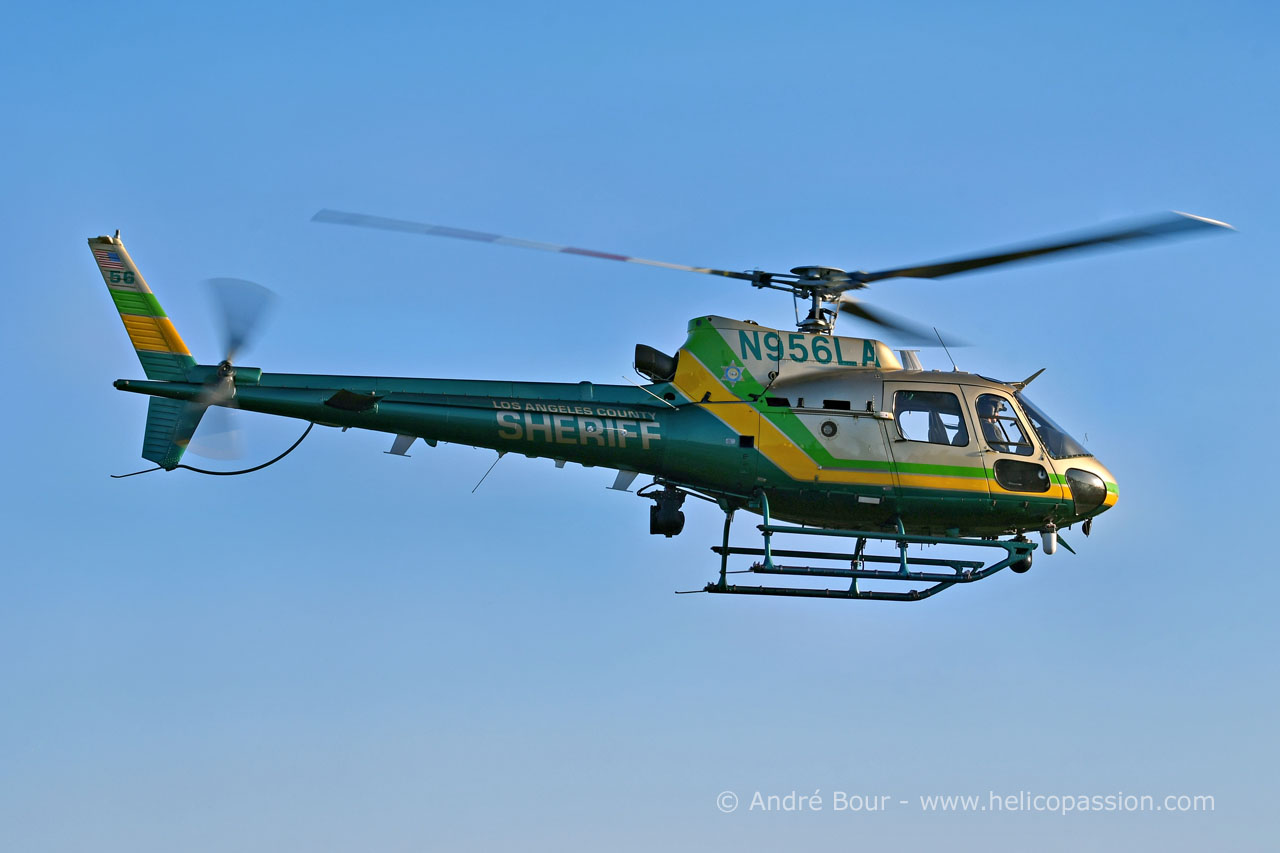 (Photo André Bour - Helicopassion) Los Angeles County Sheriff’s Department AS350 B2 N956LA, California.
France and other public services
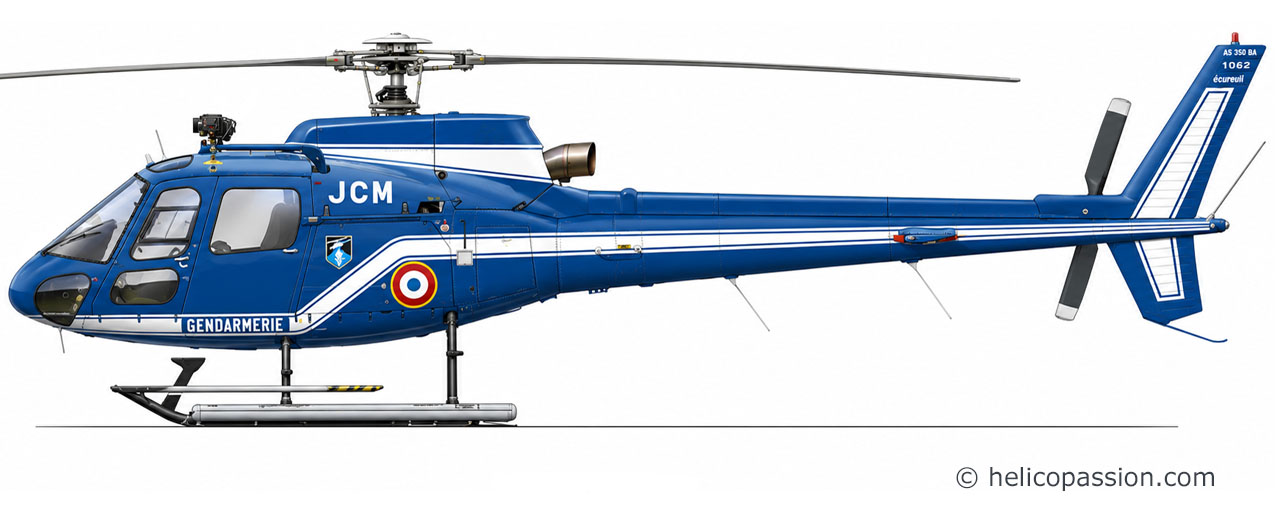
In France, the Gendarmerie nationale has used the AS350 for surveillance, searches and rescue, while the Sécurité civile operated the type for emergency missions before replacing it with the EC145.
 (Photo André Bour - Helicopassion) French Gendarmerie nationale AS350 B Ecureuil.
Comparative profiles — law enforcement and rescue
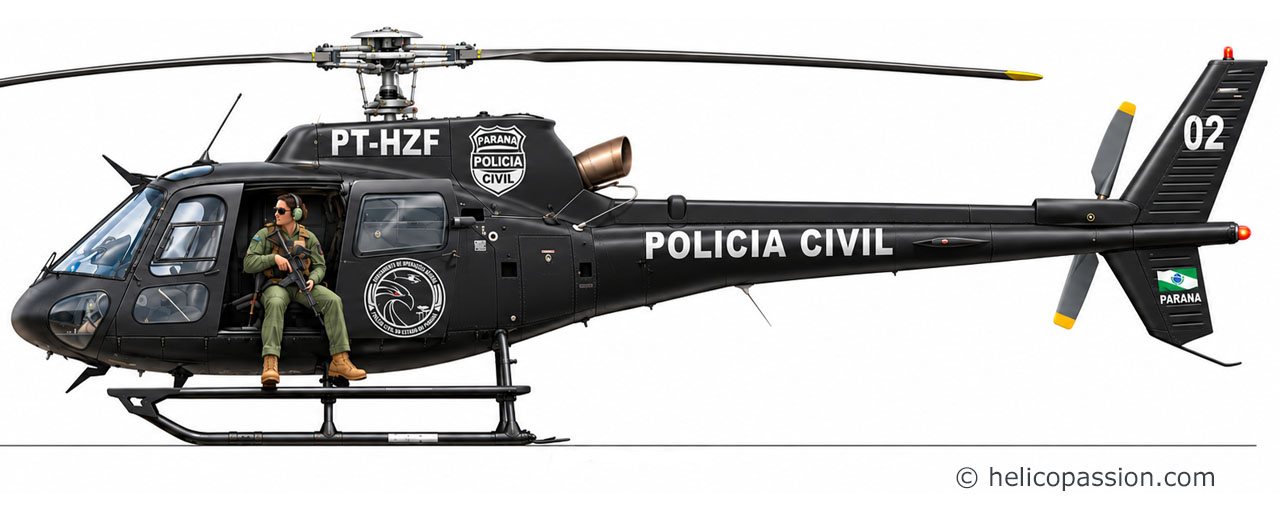
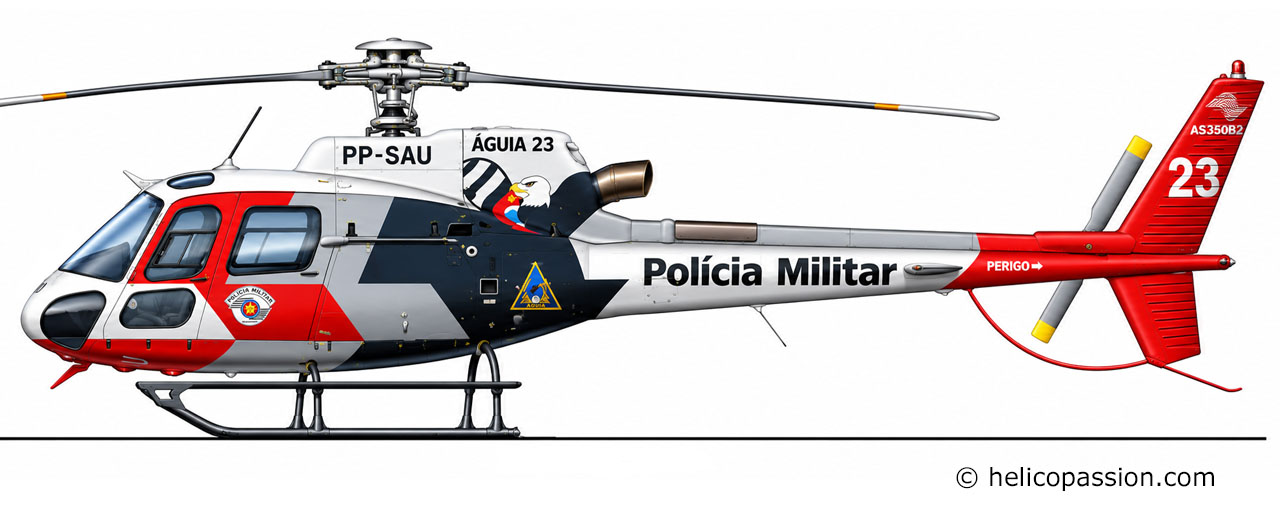
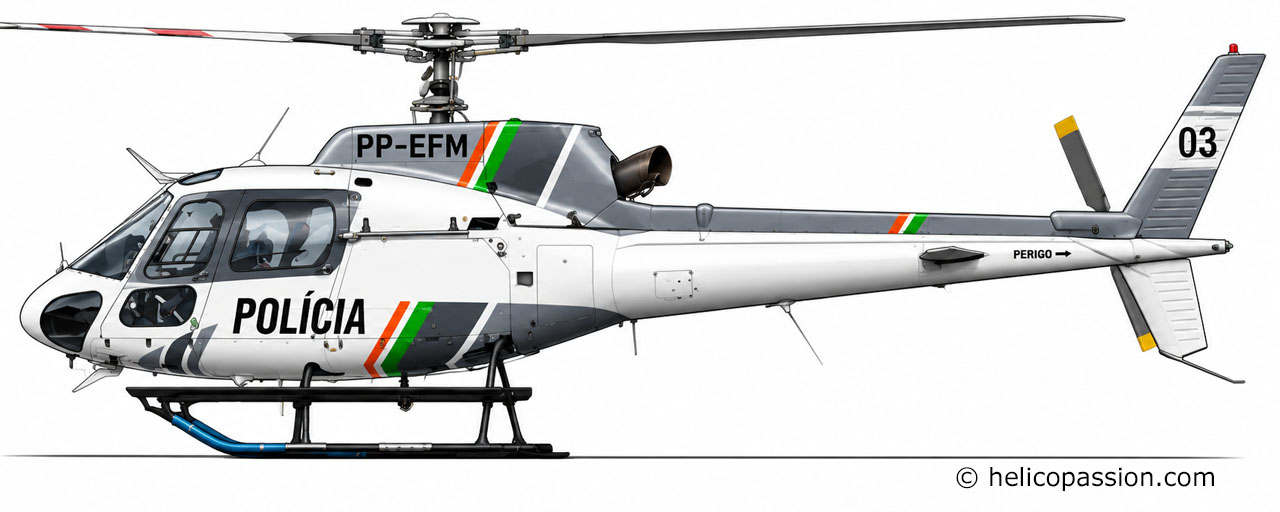
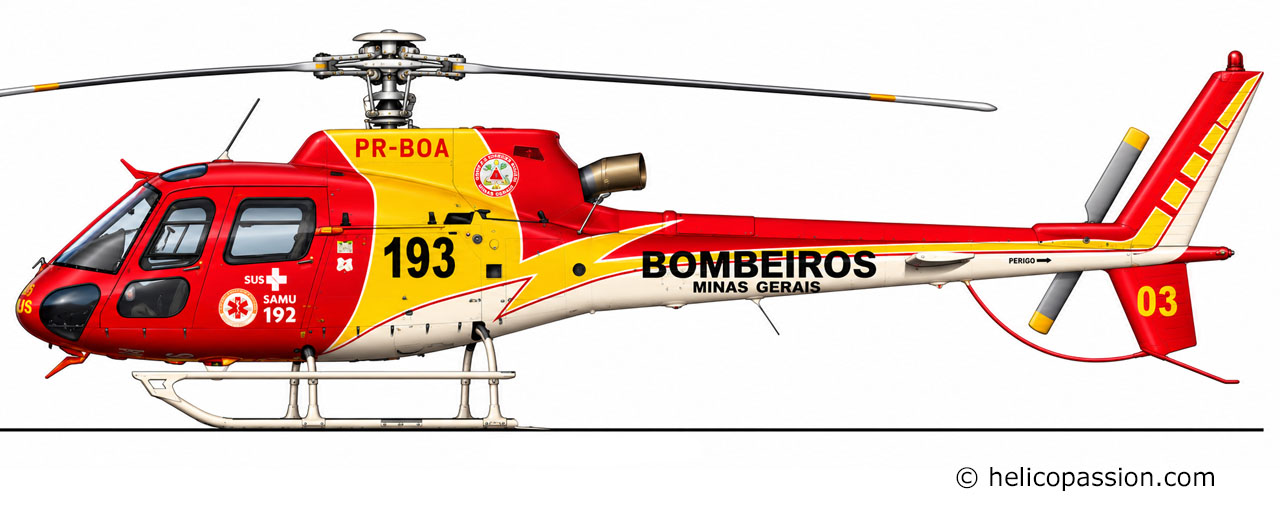 (Helicopassion profile drawing with AI)
Brazil — Minas Gerais Military Fire Brigade, AS350 B2, PR-BOA
 (Helicopassion profile drawing with AI)
USA — Los Angeles County Sheriff’s Department, AS350 B2, N953LA
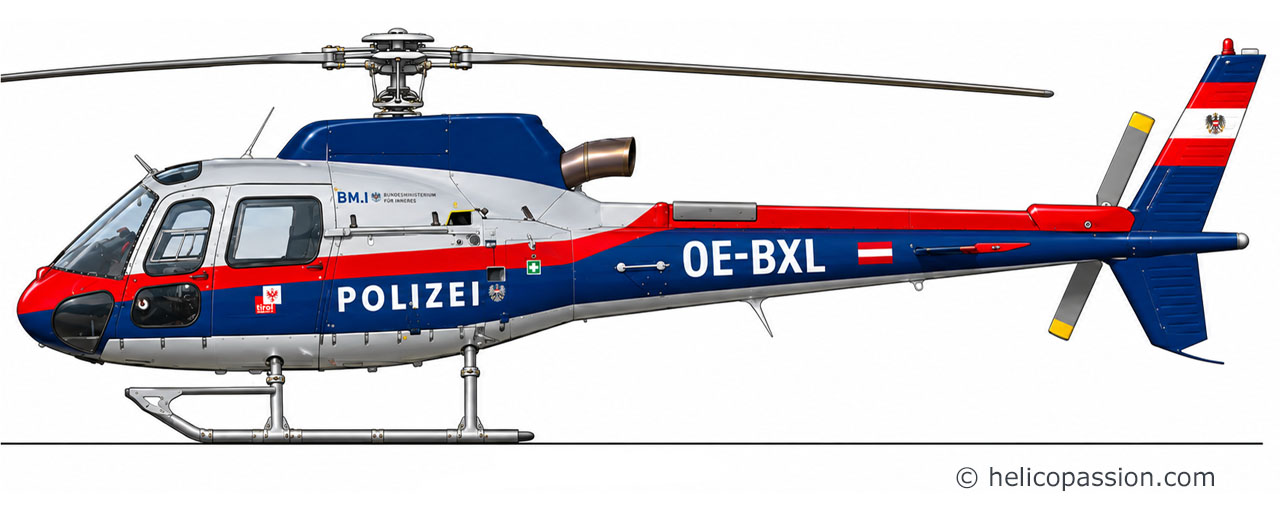
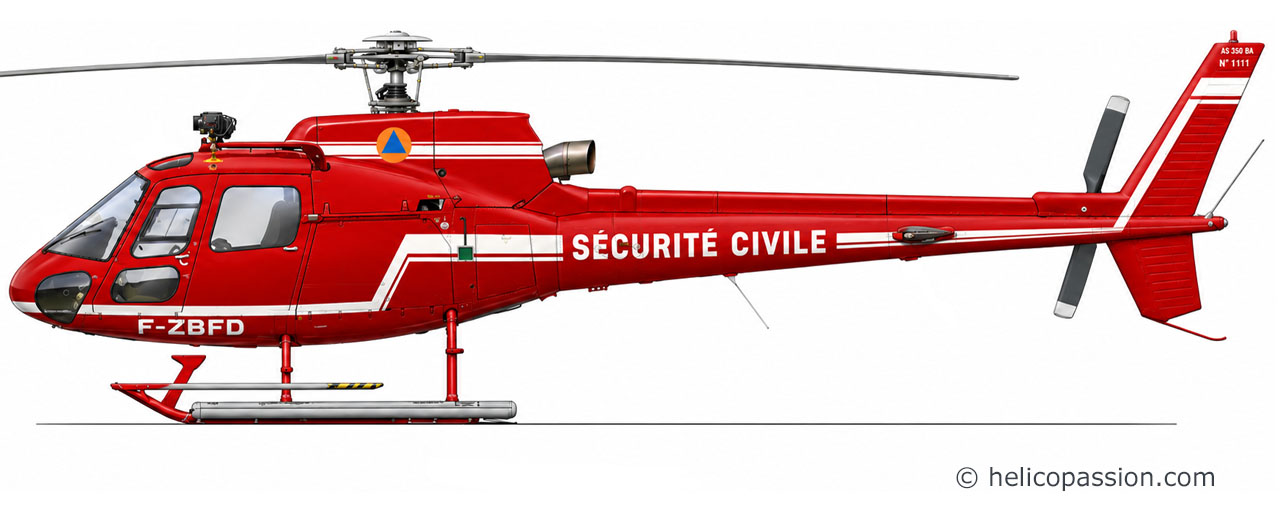
Military and naval operators
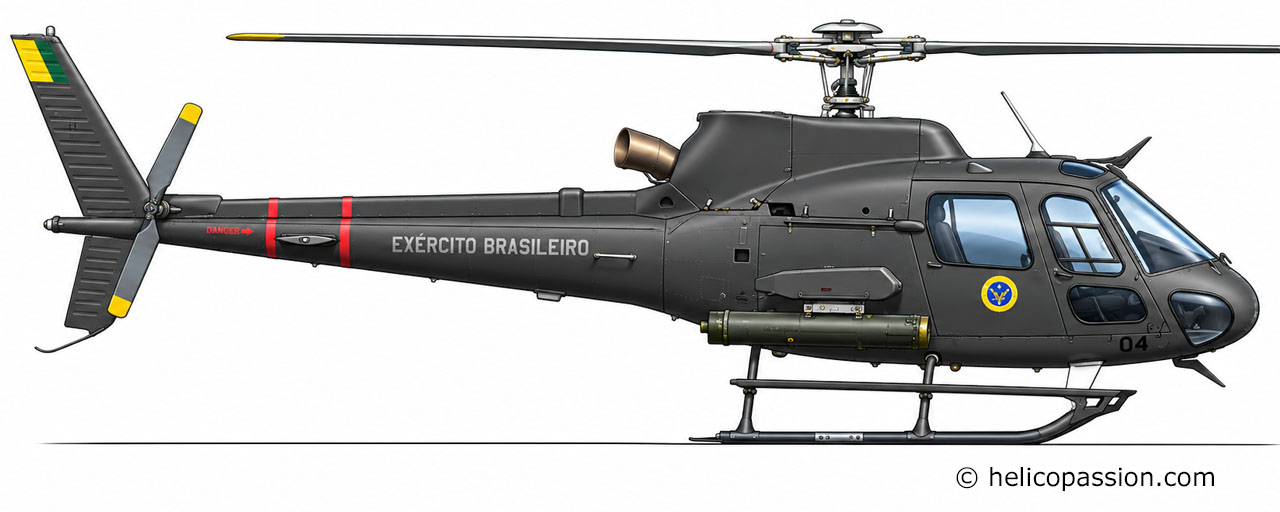
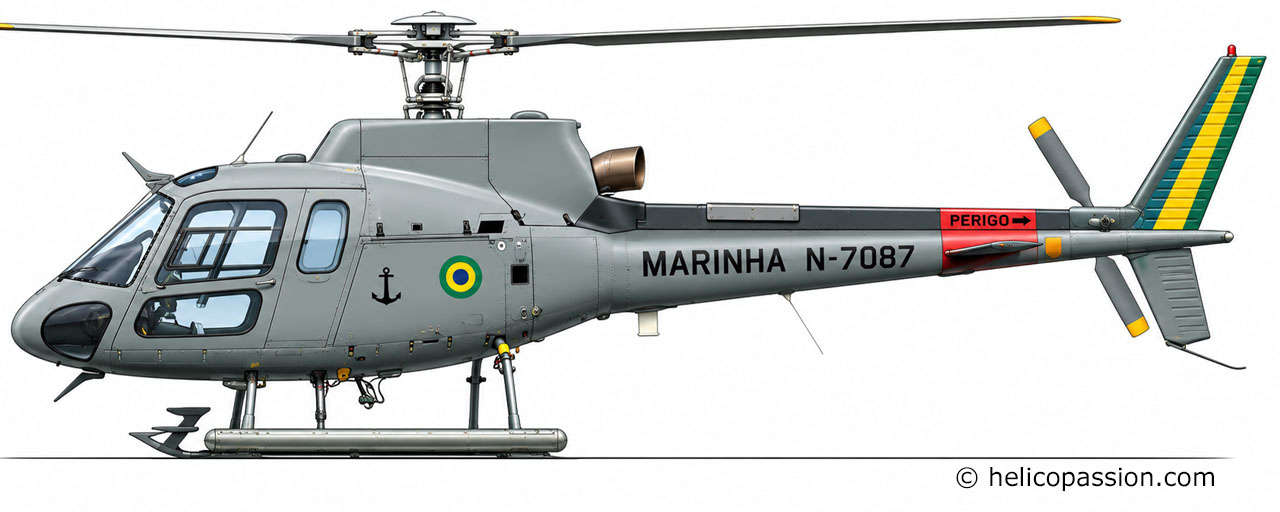
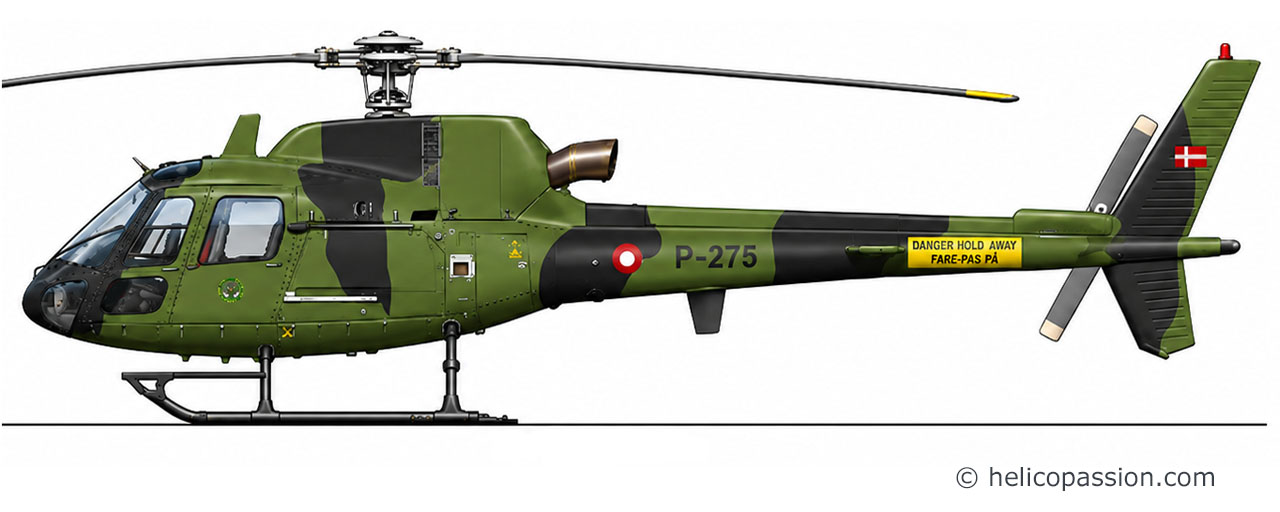
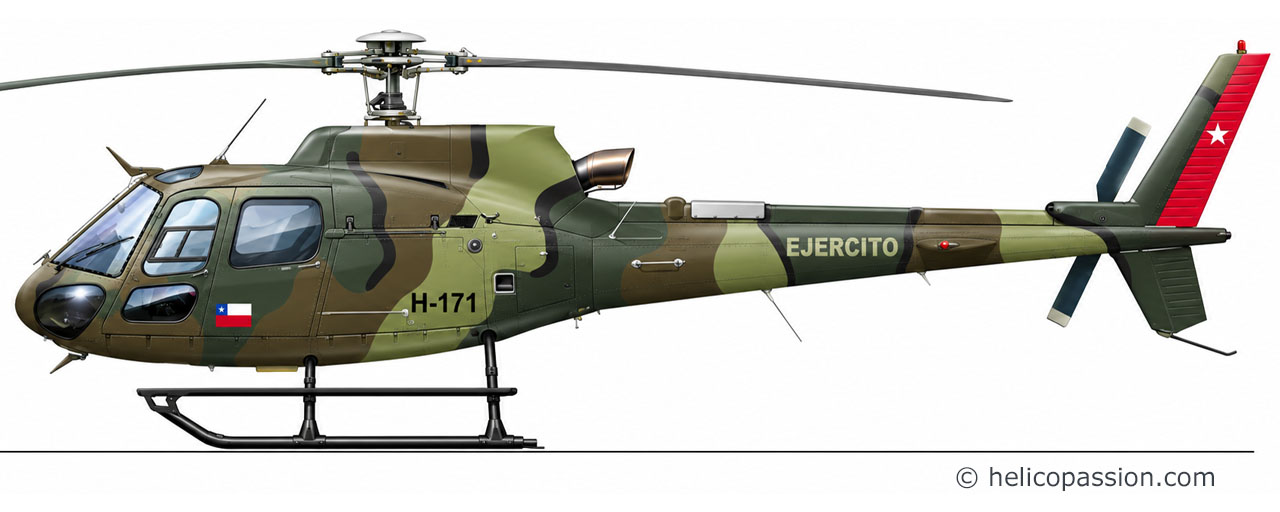
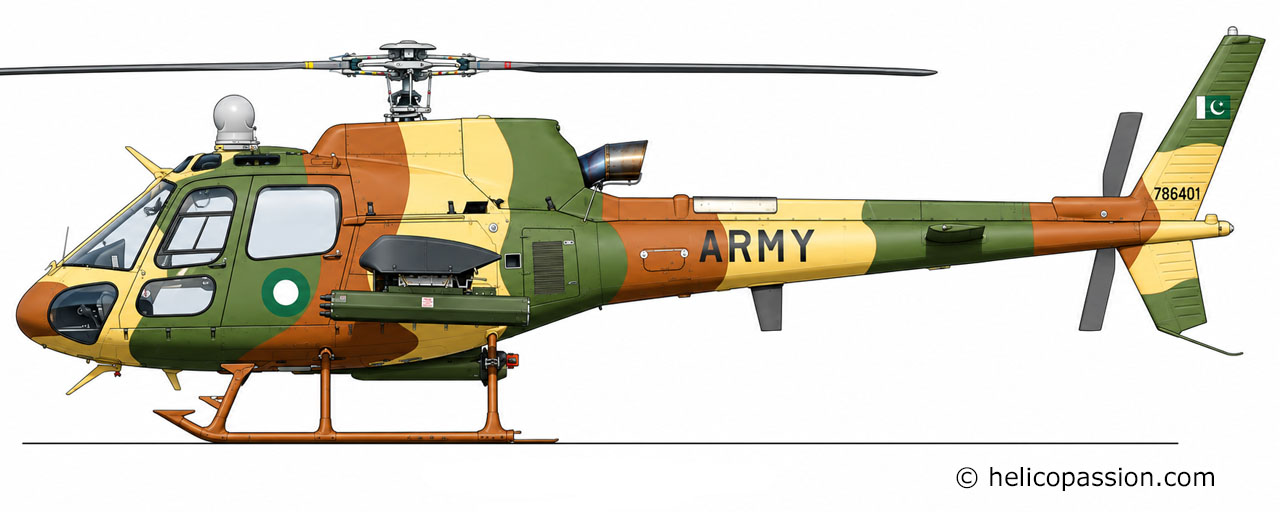
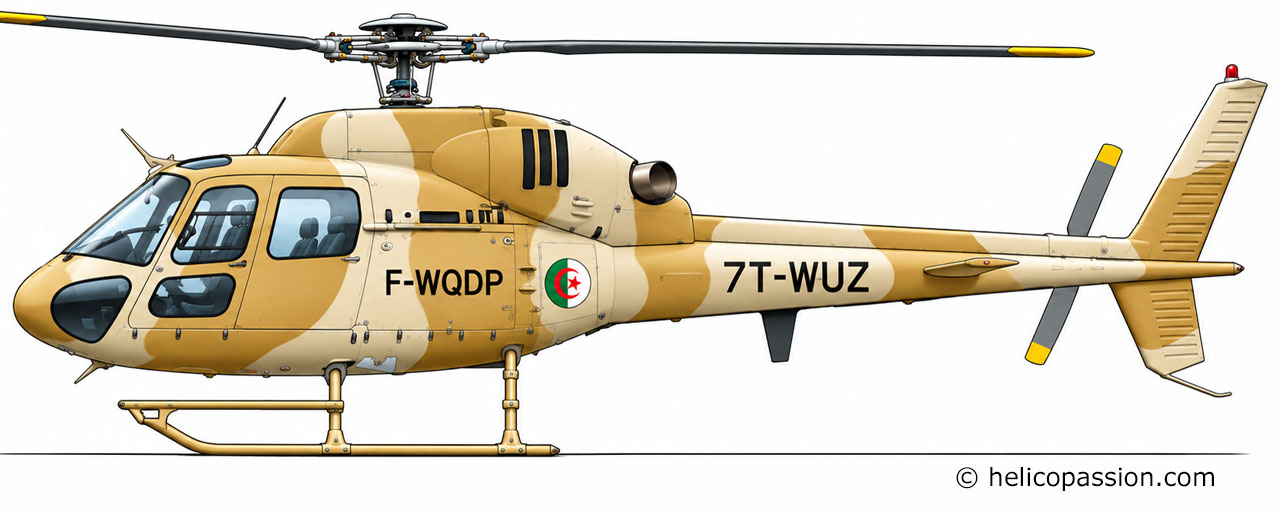
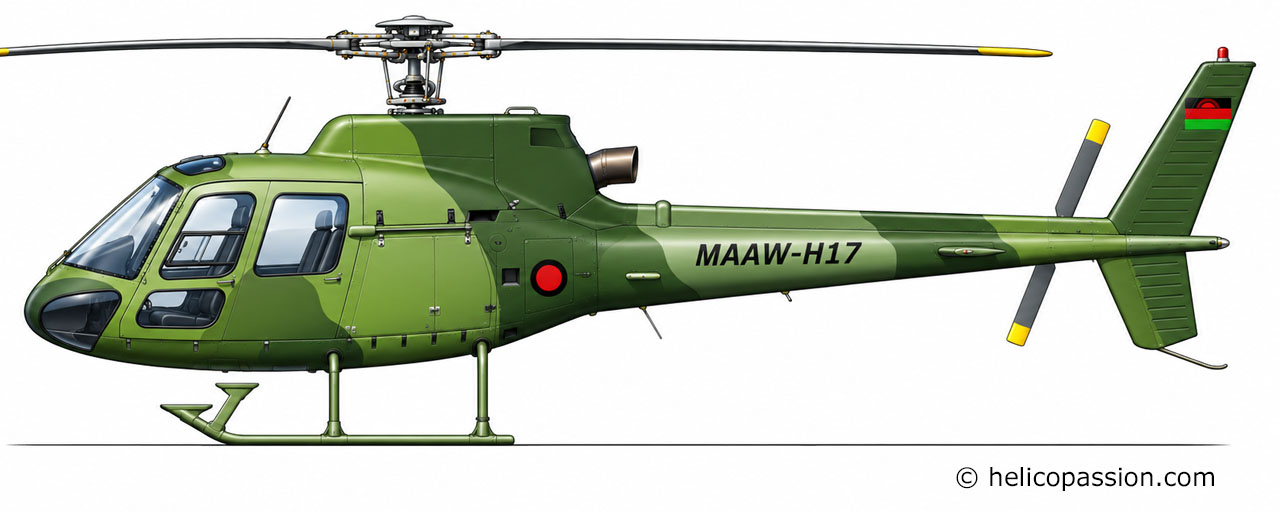
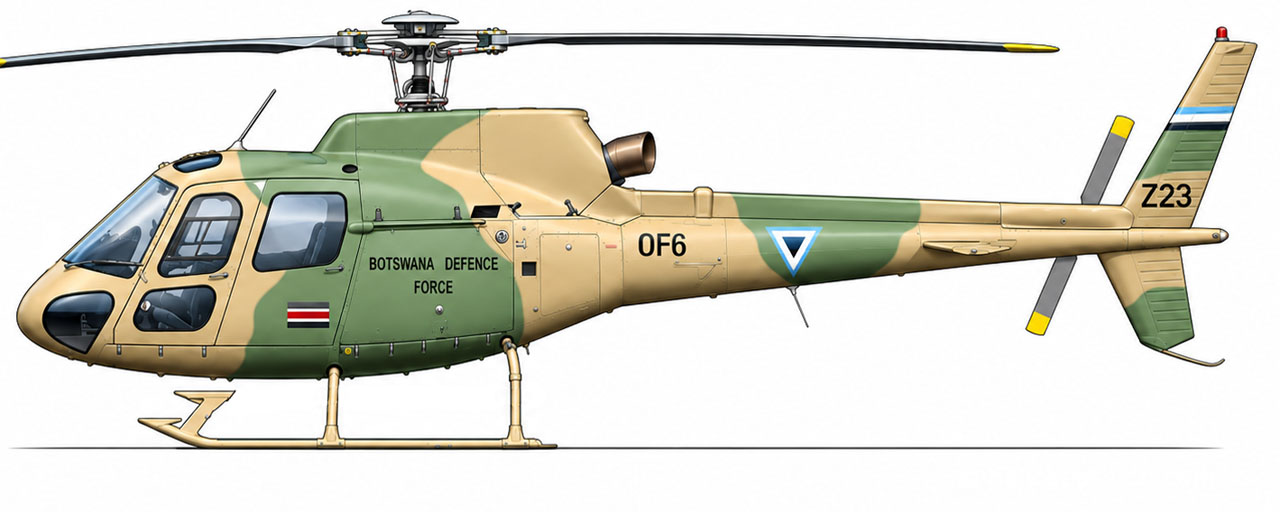
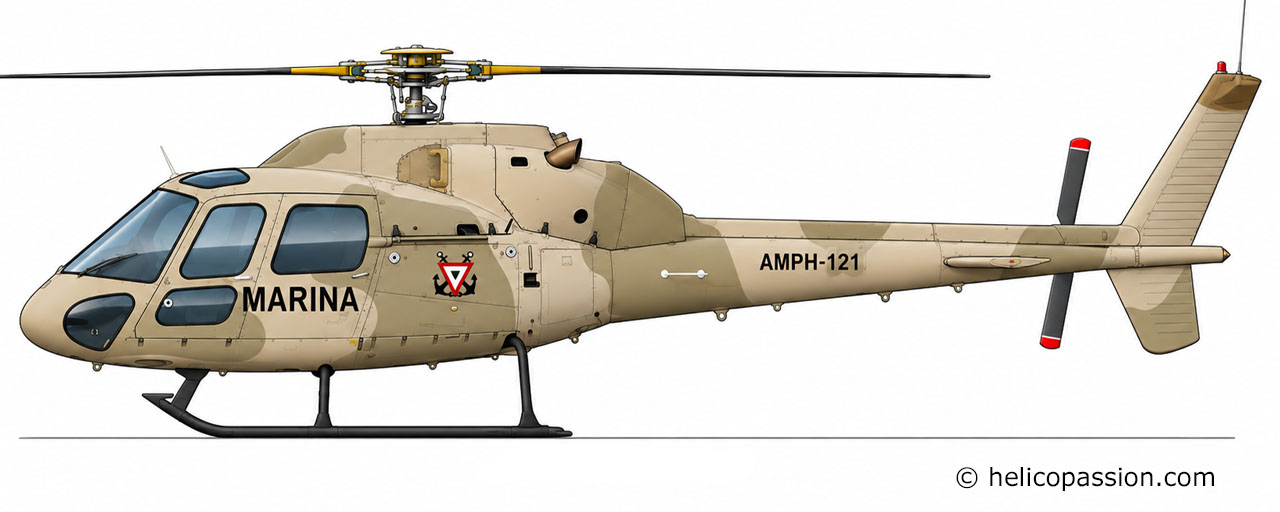
The Ecureuil family is also used by armed forces for training, liaison, reconnaissance and light transport. The AS550 and AS555 Fennec were developed specifically for military use.
France and Brazil
The French Air and Space Force uses the twin-engine AS555 Fennec for liaison, training, rescue and air security missions. The French Army has also used it for training and liaison.
In Brazil, the H-50 Esquilo is used for pilot training, the Army's HA-1A Fennec for reconnaissance and support to land operations, and the Navy's UH-12 Esquilo for liaison, maritime surveillance and rescue.
 (Photo André Bour - Helicopassion) French Air Force AS555 Fennec.
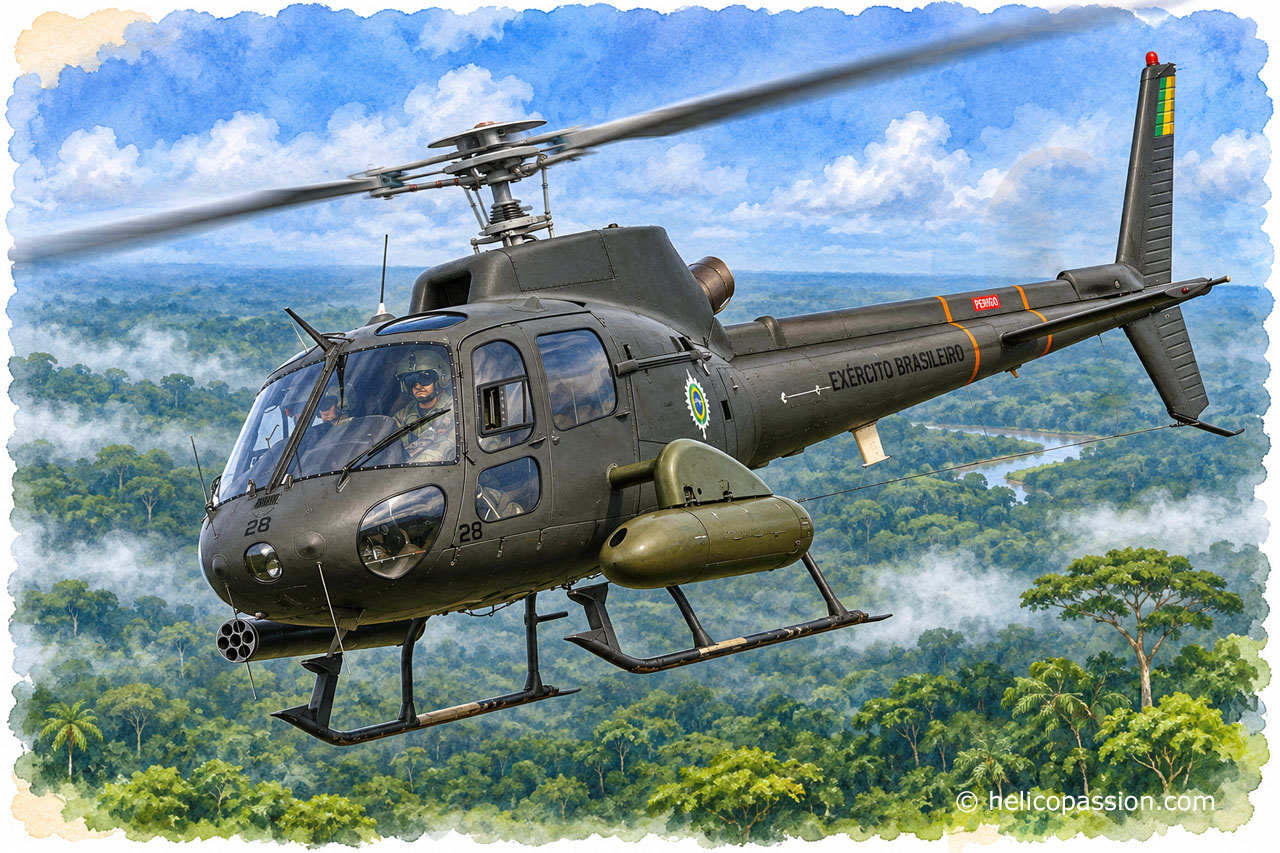 (Helicopassion illustration with AI, based on a photograph by Exército Brasileiro) Brazilian Army H125 above the Amazon rainforest — artistic illustration.
Naval operations
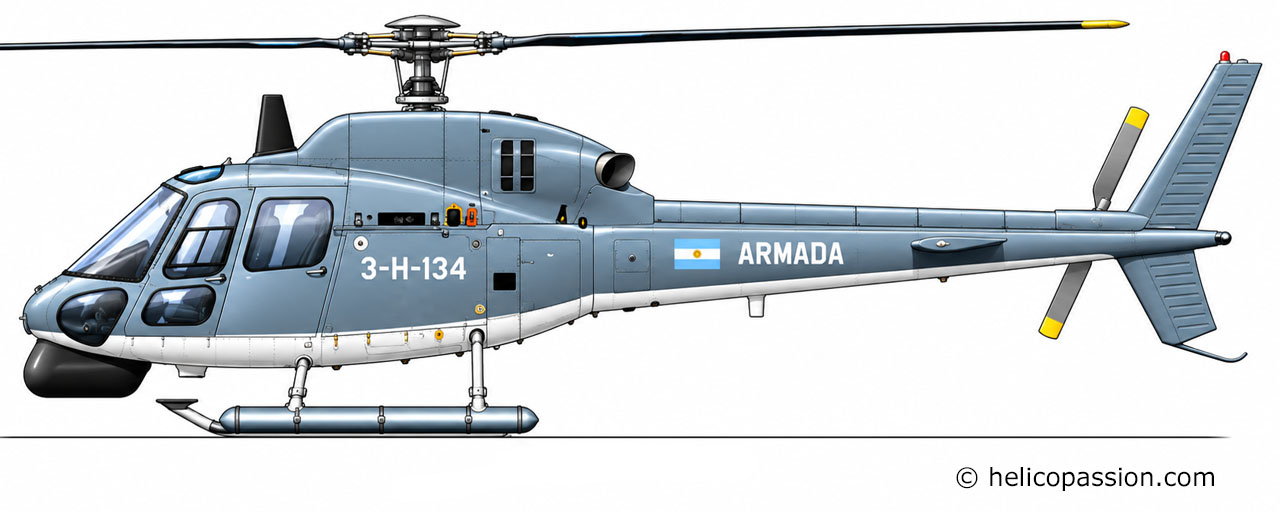
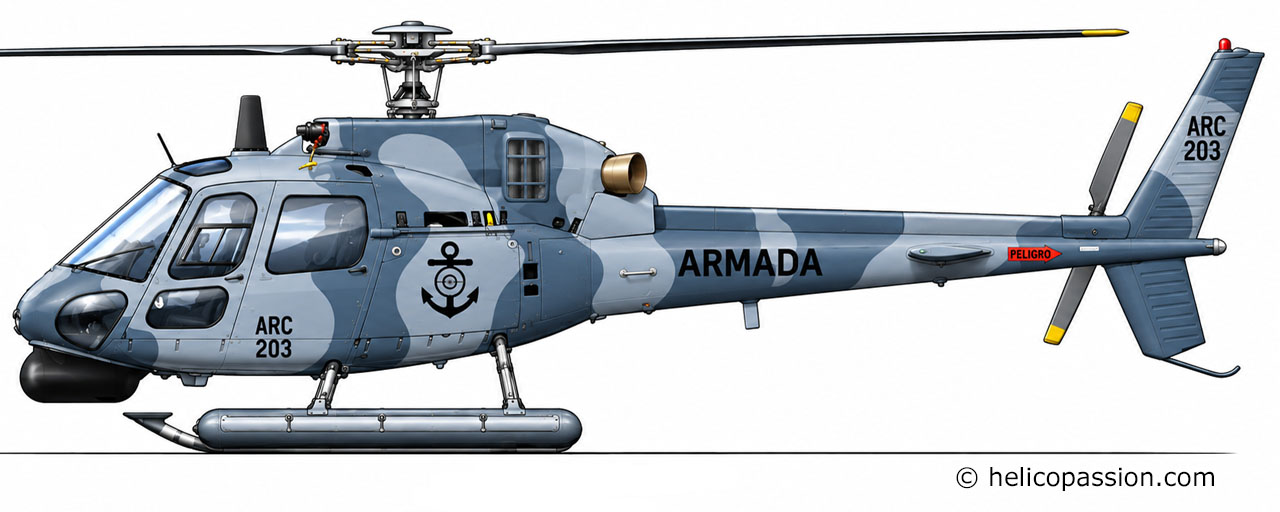
The AS555 SN Fennec, derived from the twin-engine Ecureuil, was designed as a compact helicopter for shipborne operations. Its maritime surveillance radar, folding rotor blades and emergency flotation equipment support operations from smaller naval vessels.
Argentina, Colombia and Malaysia acquired the AS555 SN for missions including maritime surveillance and over-the-horizon targeting. Other navies, including Australia and Brazil, have used single-engine versions of the Ecureuil.
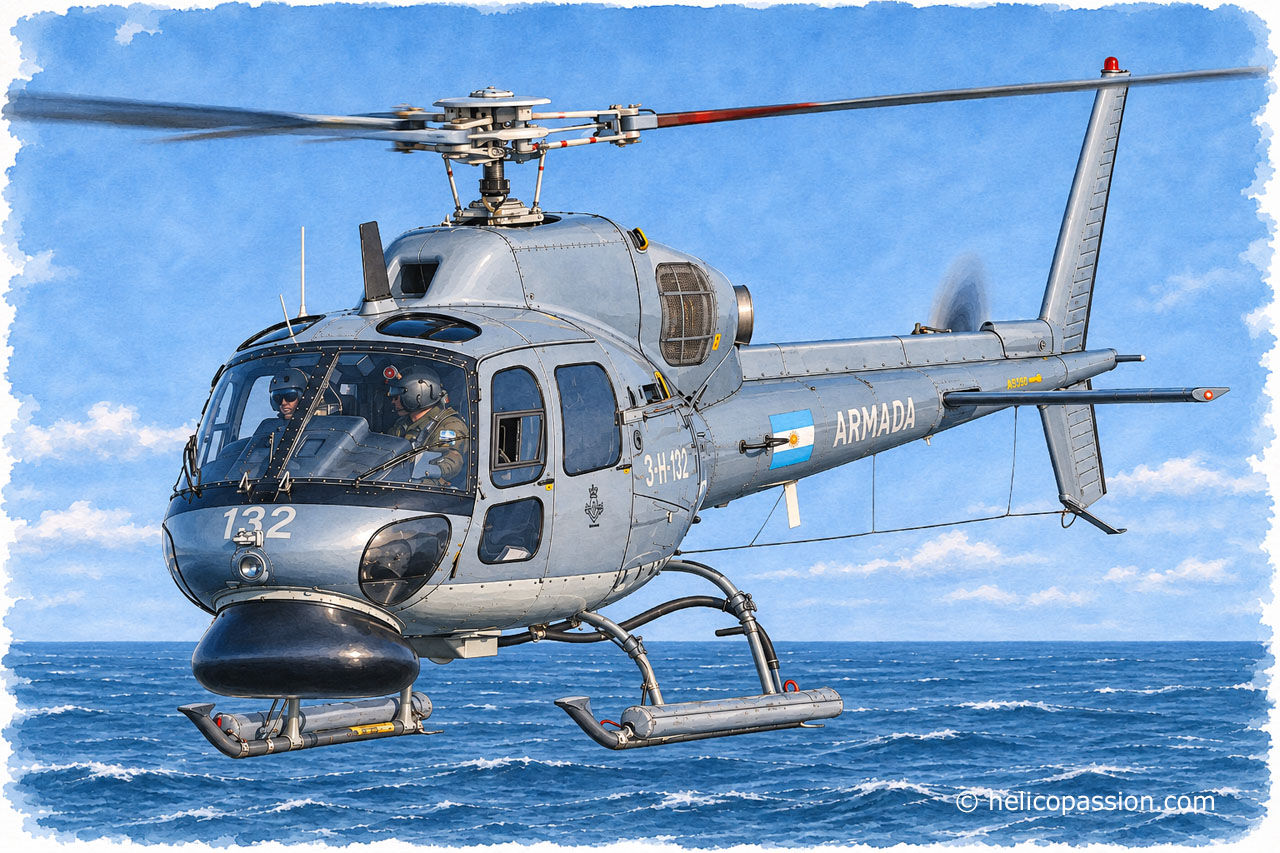 (Helicopassion illustration with AI, based on a photograph by Armada Argentina) Argentine Navy AS555 SN Fennec 3-H-134 with maritime surveillance radar — artistic illustration.
 (Photo Dave White) Royal Australian Navy AS350 B2 Ecureuil.
Comparative profiles — armed forces
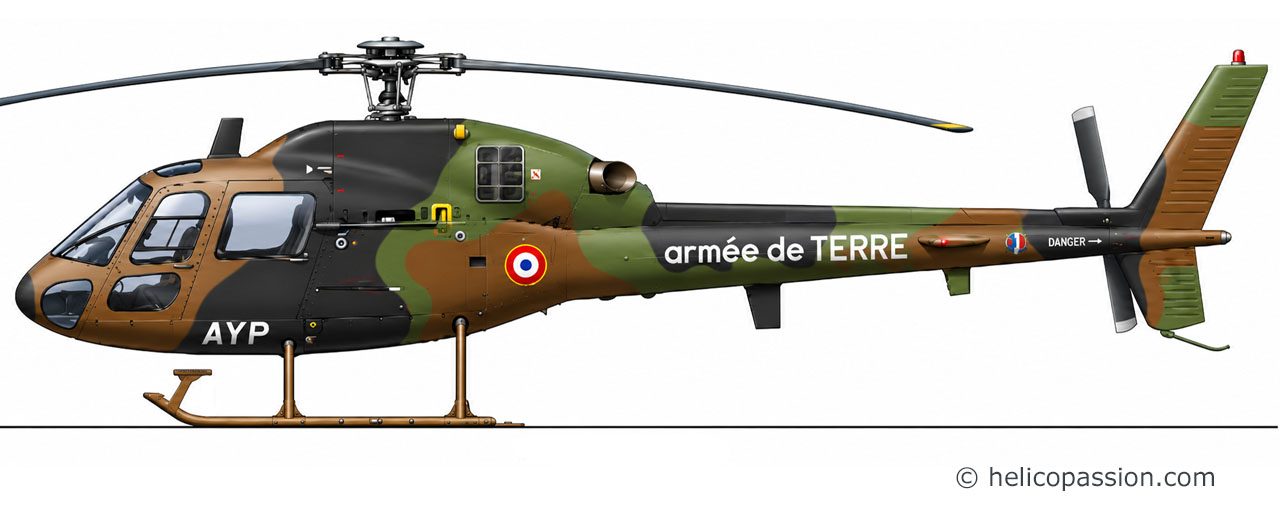
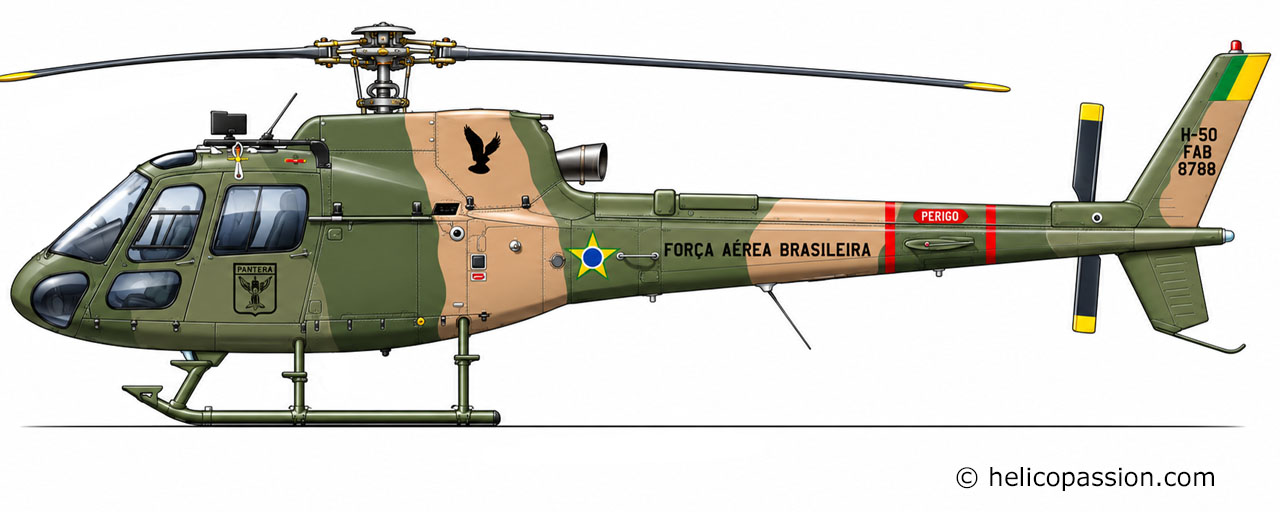 (Helicopassion profile drawing with AI)
Brazil — Air Force, H-50 Esquilo, sand and two-tone green camouflage
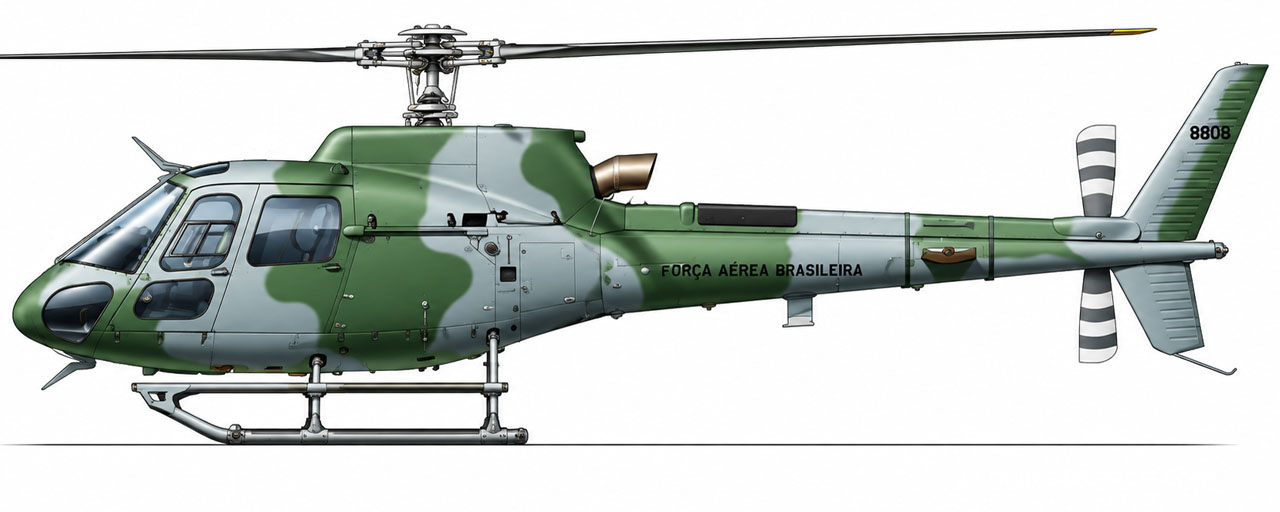
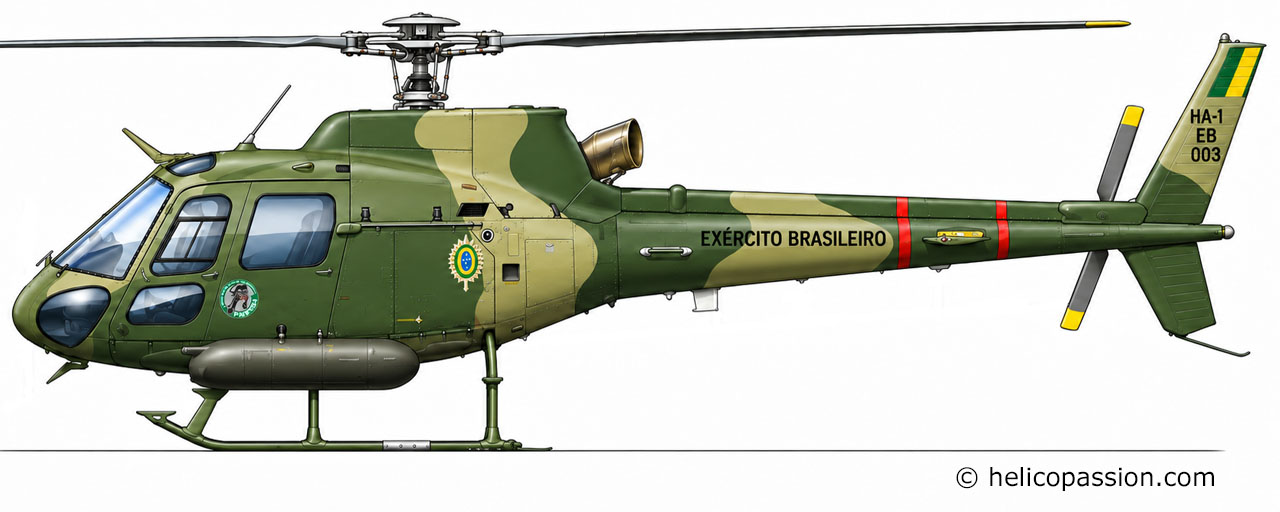
Beyond this visual guide
From the highest peaks of the Himalayas to the streets of Brazilian cities, this visual journey reflects the remarkable versatility of the Ecureuil family. The photographs, illustrations and comparative profiles presented here are part of a much larger collection of aviation documentation built up over the years by Helicopassion and its contributors.
Complete Ecureuil dossier (in French)
Development, technical characteristics, performance, civilian operators, public services and armed forces.